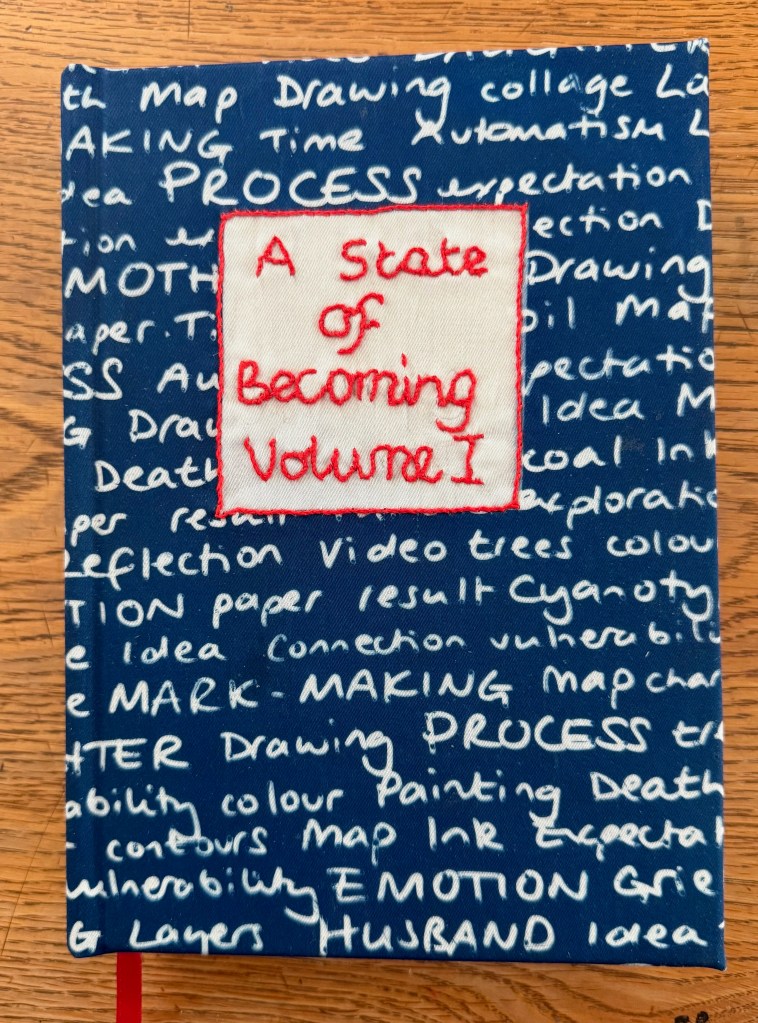
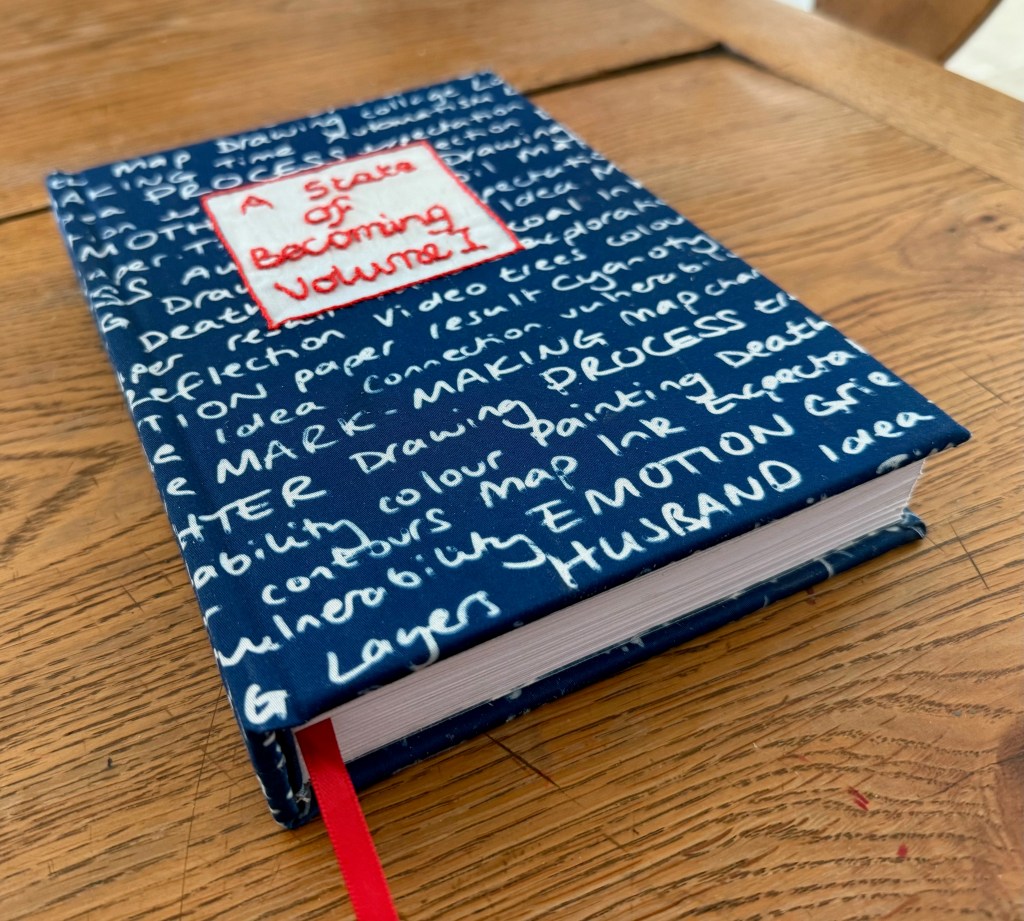
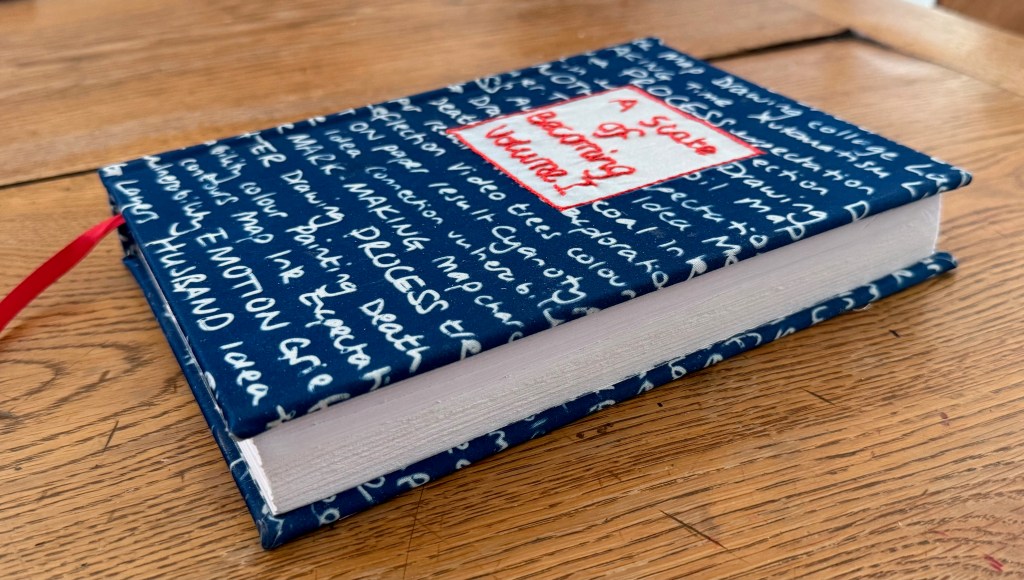
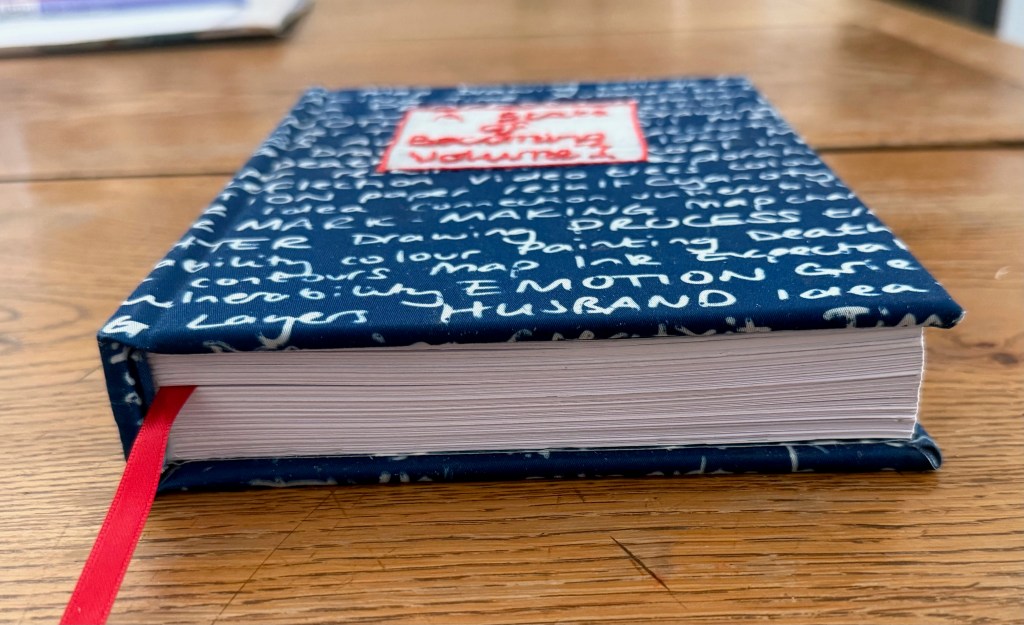
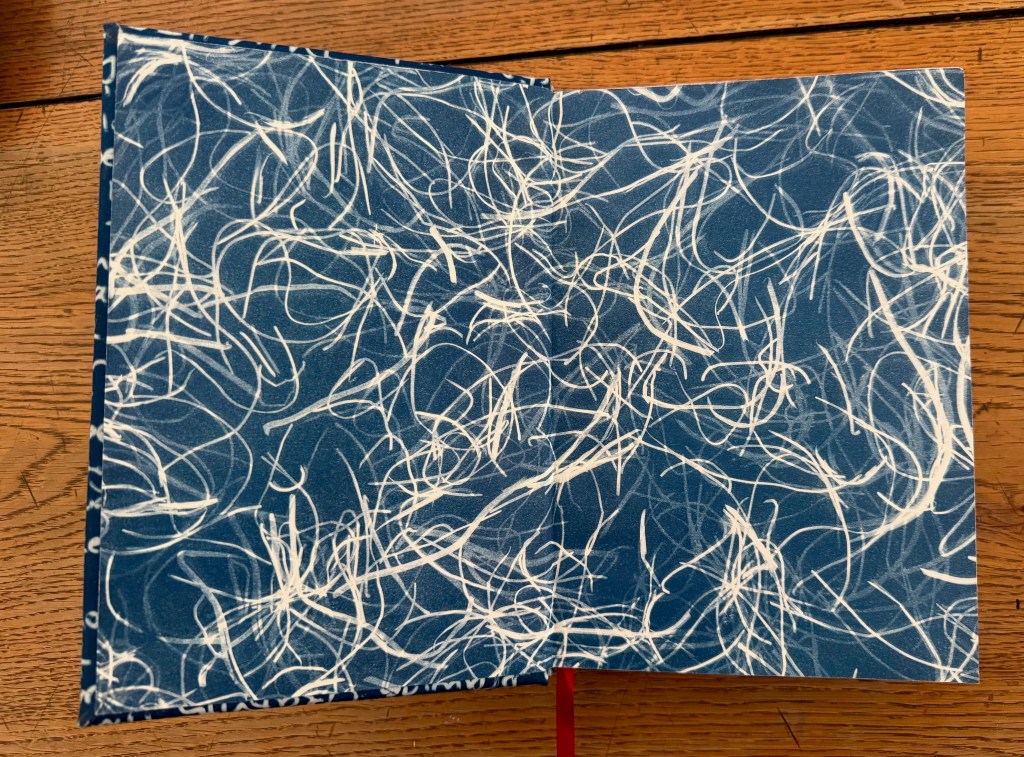
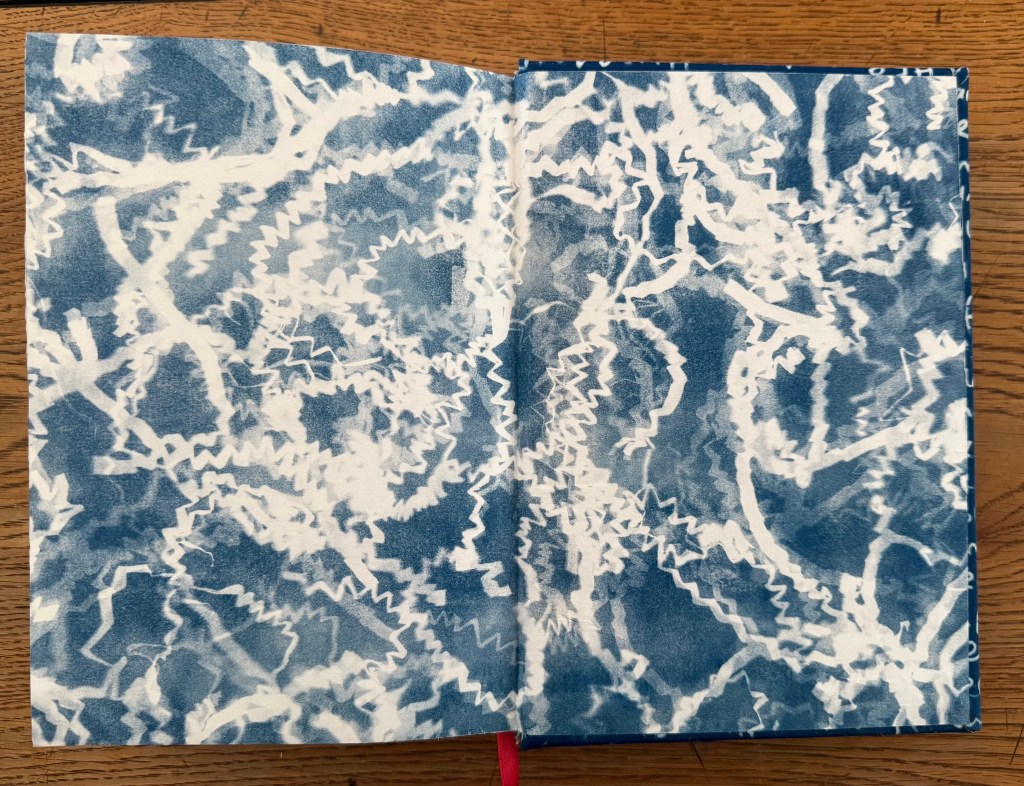
Well, I’ve finished Volume I and I’m really quite pleased with it, and relieved. A great improvement on my first attempt and no major catastrophes along the way.
It will need to go in the bookpress overnight and then I will trim and seal the ribbon.
Whatever information existed about me on the internet was secreted away in tiny amounts on disparate websites, and should anyone want to find out anything about me, they would have to spend oodles of time searching, trawling and collating. Now, Google AI will do it almost instantaneously, and even suggest follow-up questions.
Of course, accuracy cannot be guaranteed – not sure whether that is a good or a bad thing. In fact, a google search of my husband reveals lots of information about me and my daughter as well as unearthing a secret love child by the name of Josh. Luckily the man in the photo isn’t my husband, but a former work colleague. Needless to say, this second family has become something of a standing joke…
Well, having decided to fit the whole of the blog (so far) into two volumes, it became necessary to review the format. Having gone through all of the blog I thought that the final number of pages would be just under 600 which would mean 300 pages per book. This would mean increasing the number of signatures which could make things quite bulky at the spine and so I decided to reduce the number of sheets in each signature from 5 to 4. I had to reformat all of the text into 16 page booklets. It was a real pain as images and text began to move about all over the place.
Anyway, I finally managed to finish it and print out the first volume by the end of the Scotland match last night. As I was part way into the second volume I thought to myself that the posts I was printing out were really quite recent. Turns out that there are 500 not 600 pages and far from being 2 evenly sized volumes the first is going to be much bigger than the second.
I had to laugh at myself – I was thinking that everything was going a bit too well. So they are going to be odd books with quite a few errors in which I missed when I reformatted the text. One of the pages isn’t numbered either – that would have really irritated me two years ago and I would have printed it all out again to get it right. I just smiled to myself and thought that no-one is going to notice it and that if they do, then that’s really sad… for them! It’s my secret.
I woke up this morning with the thought in my head that I only have enough greyboard to make one book. I couldn’t get back to sleep until I had dealt with this problem, as I’ve really only got this weekend to finish the books. I’m not sure how this has happened – I’ve known since April that I’m making two books. I also realised at the end of last week that I’ve only got a little bit of archival glue left, so I had to order some more of that too.
Maybe I have some sort of anxiety about making the books – they’re the only pieces I’m making that I have an end product in mind – after the unsuccessful first attempt, maybe I’m delaying having to deal with them. Dilly dallying. Ironically, the experimental pieces are all ready to go off on Wednesday for the beginning of the show installation.
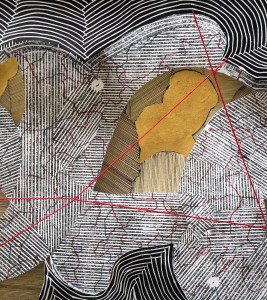
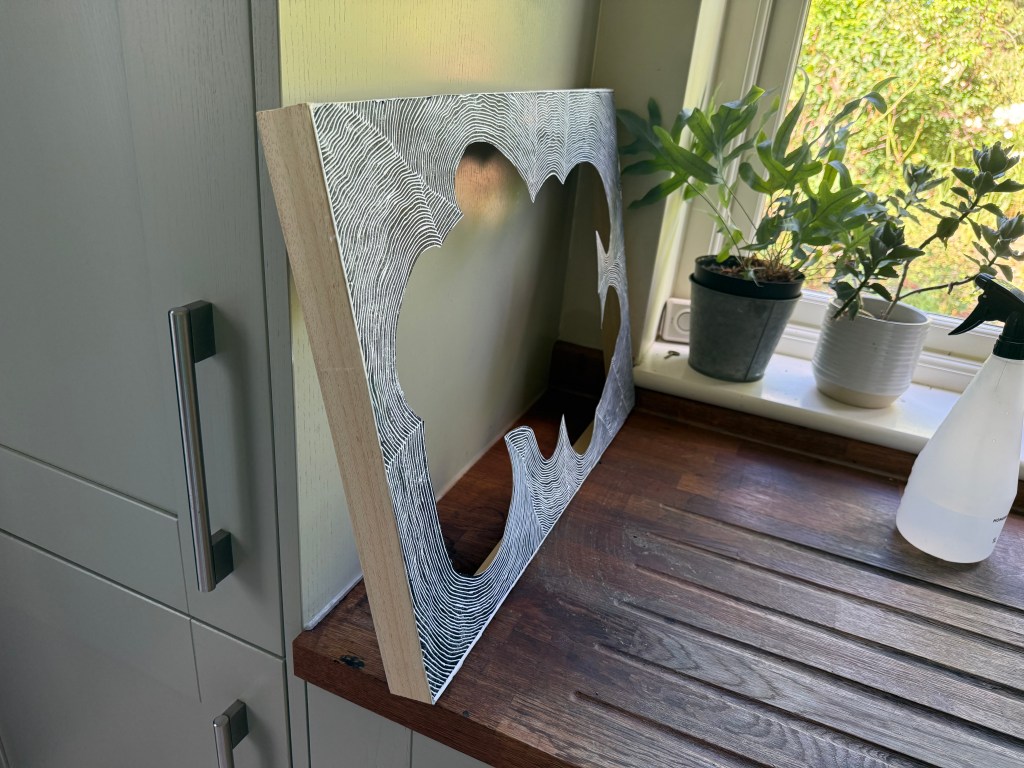
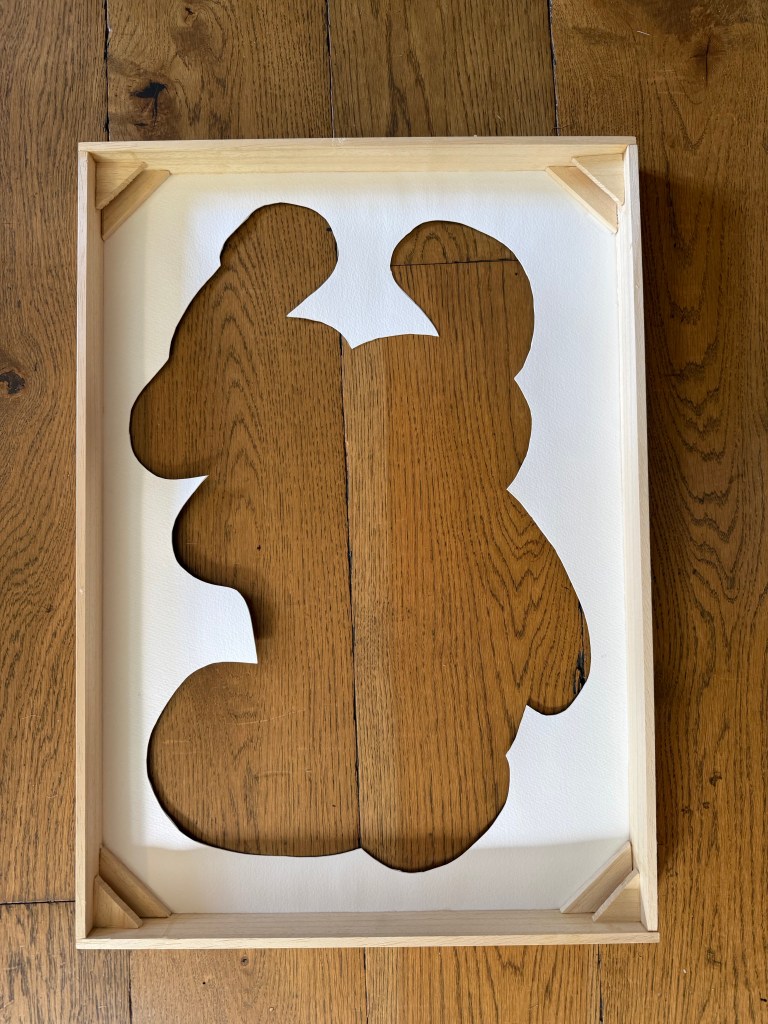
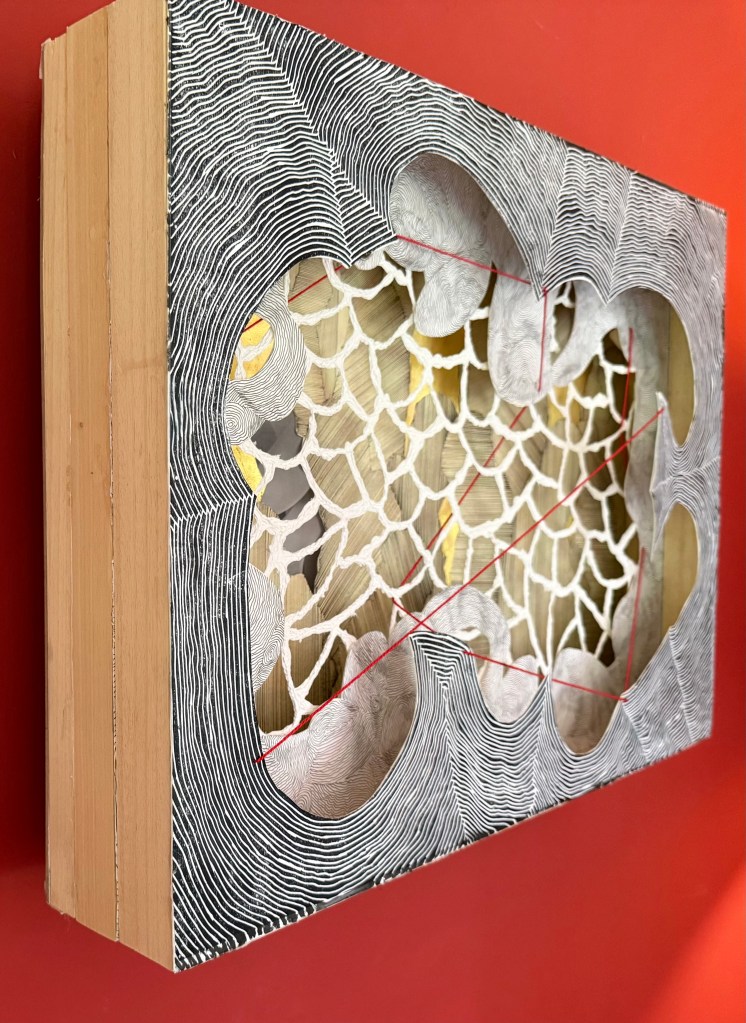
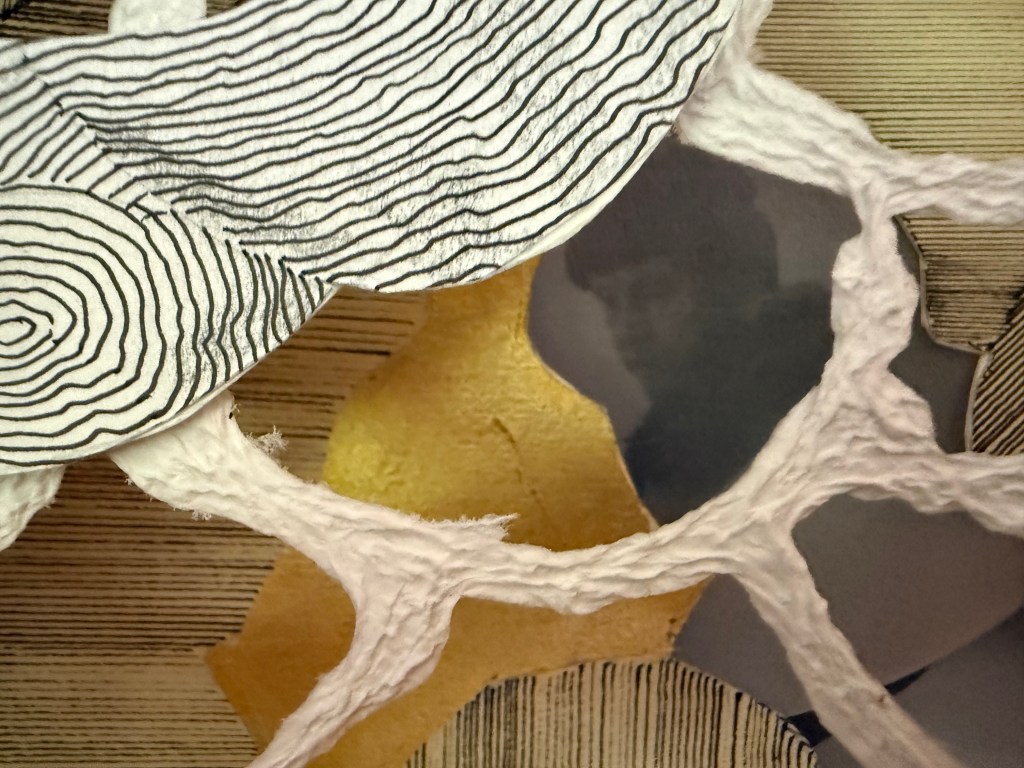
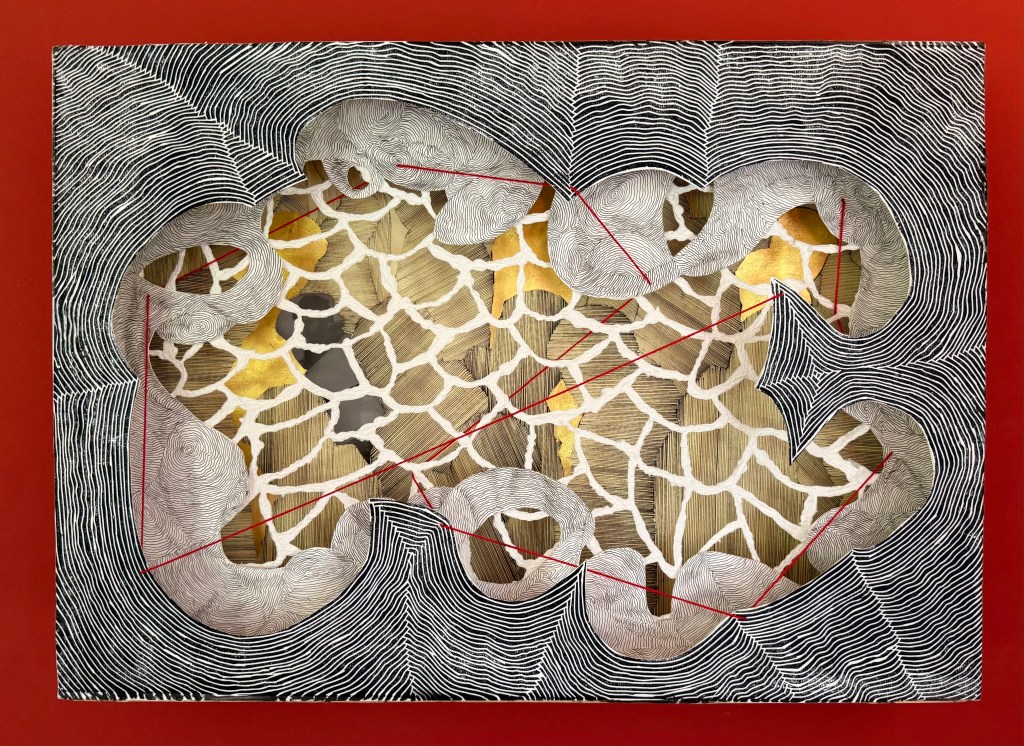
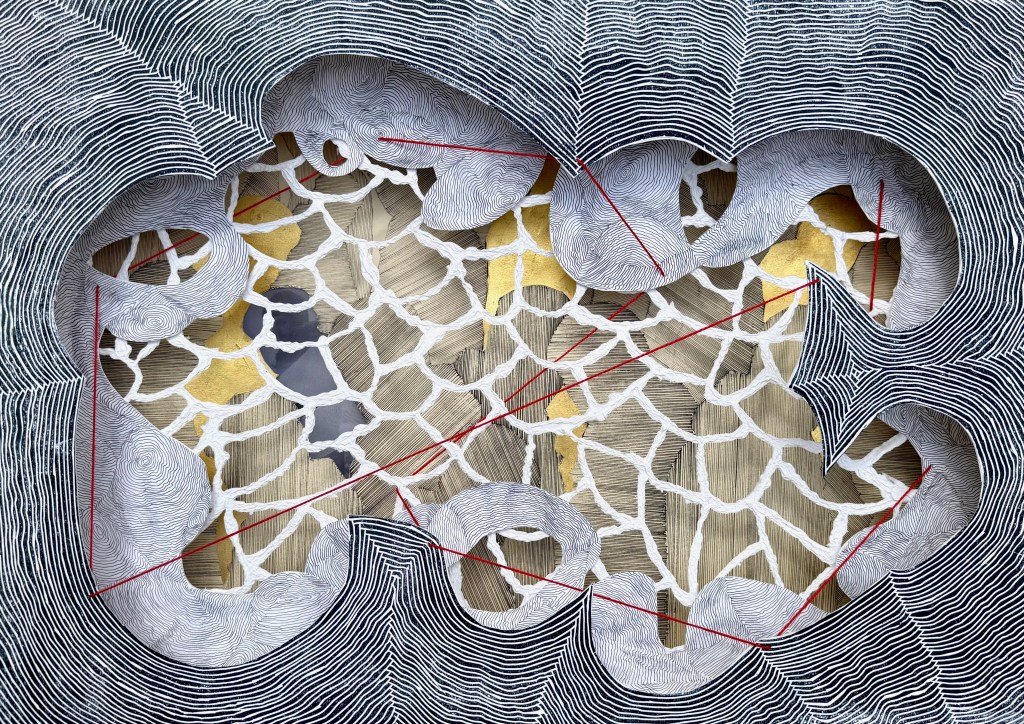
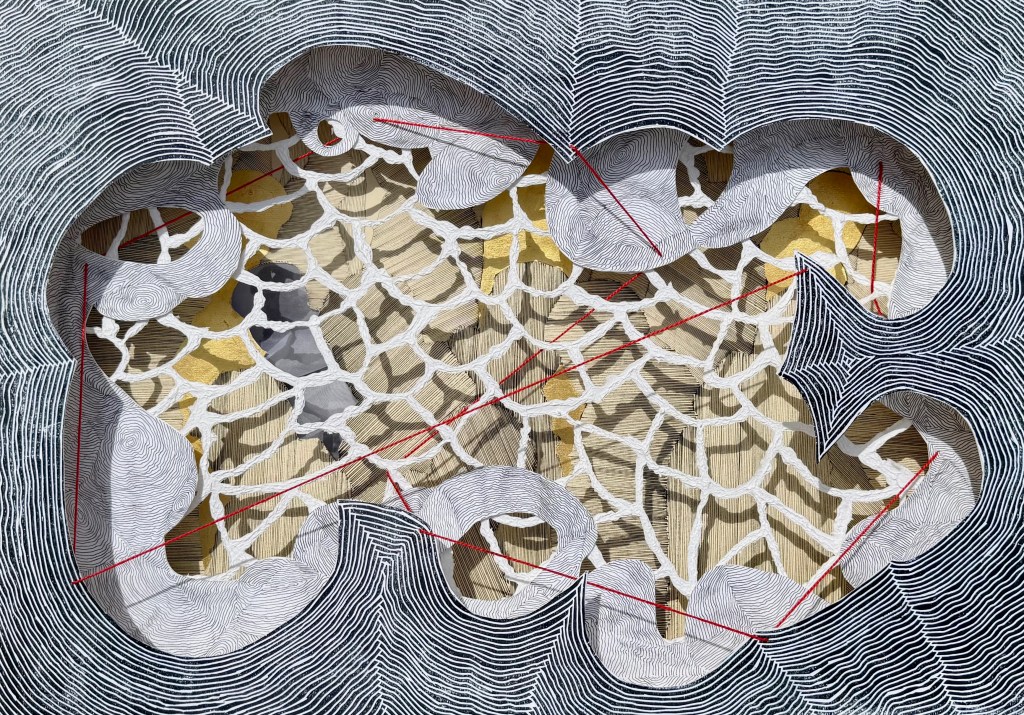
I’ve finished my layered piece. I ummed and ahhed for a while about whether I should paint the inside of the wood frames but decided against it – I like that you can see how I made it. The bottom layer is on MDF and each subsequent layer out of a wooden frame which I made onto which I then glued the image and secured with moulding pins. I then glued them all together using Gorilla wood glue. It’s not very heavy so it should hold, but just in case I have stapled the layers together on the top and bottom where the staples won’t be visible. I hesitated about the red thread – I wanted to use it emphasise the layers but in the last iteration I had the threads looping around each other. I decided to keep it simple this time. I like the end result.
I really like the cast shadows when it is photographed in the sun:
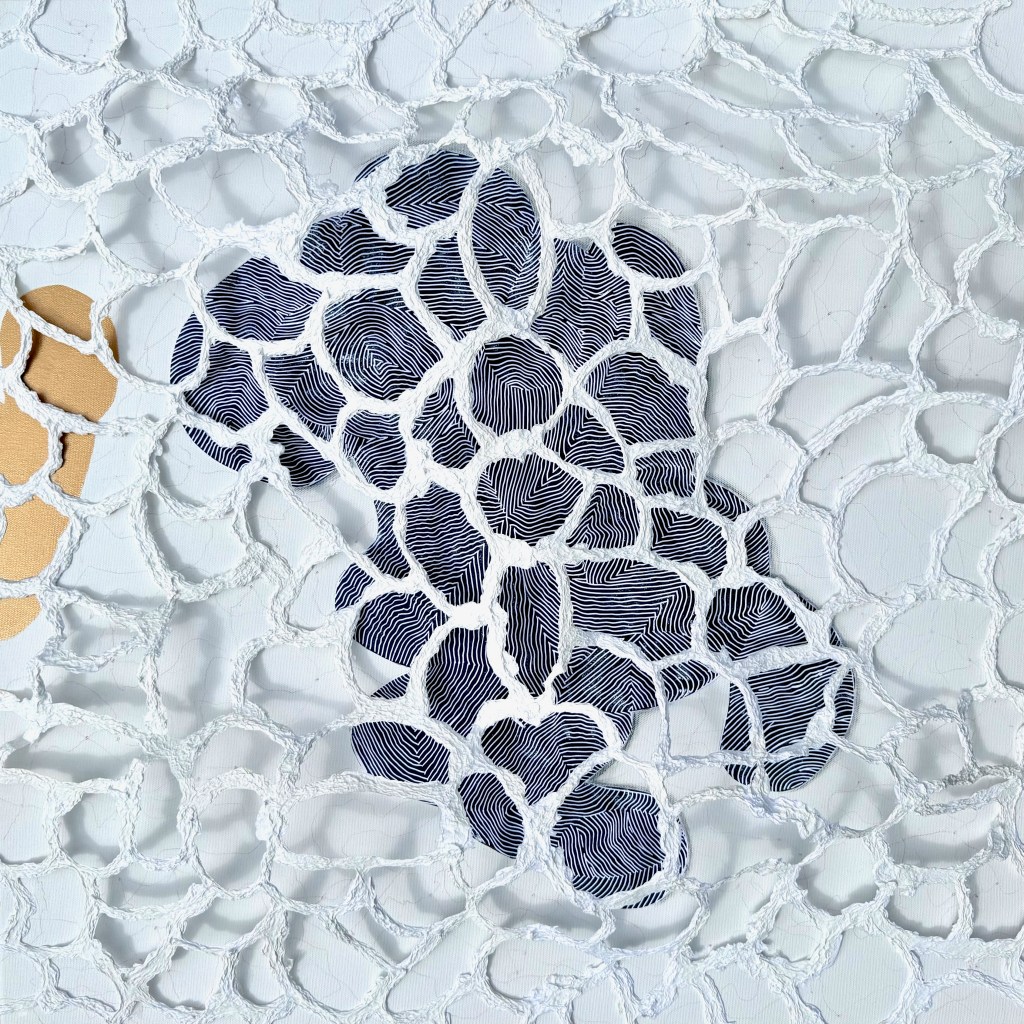
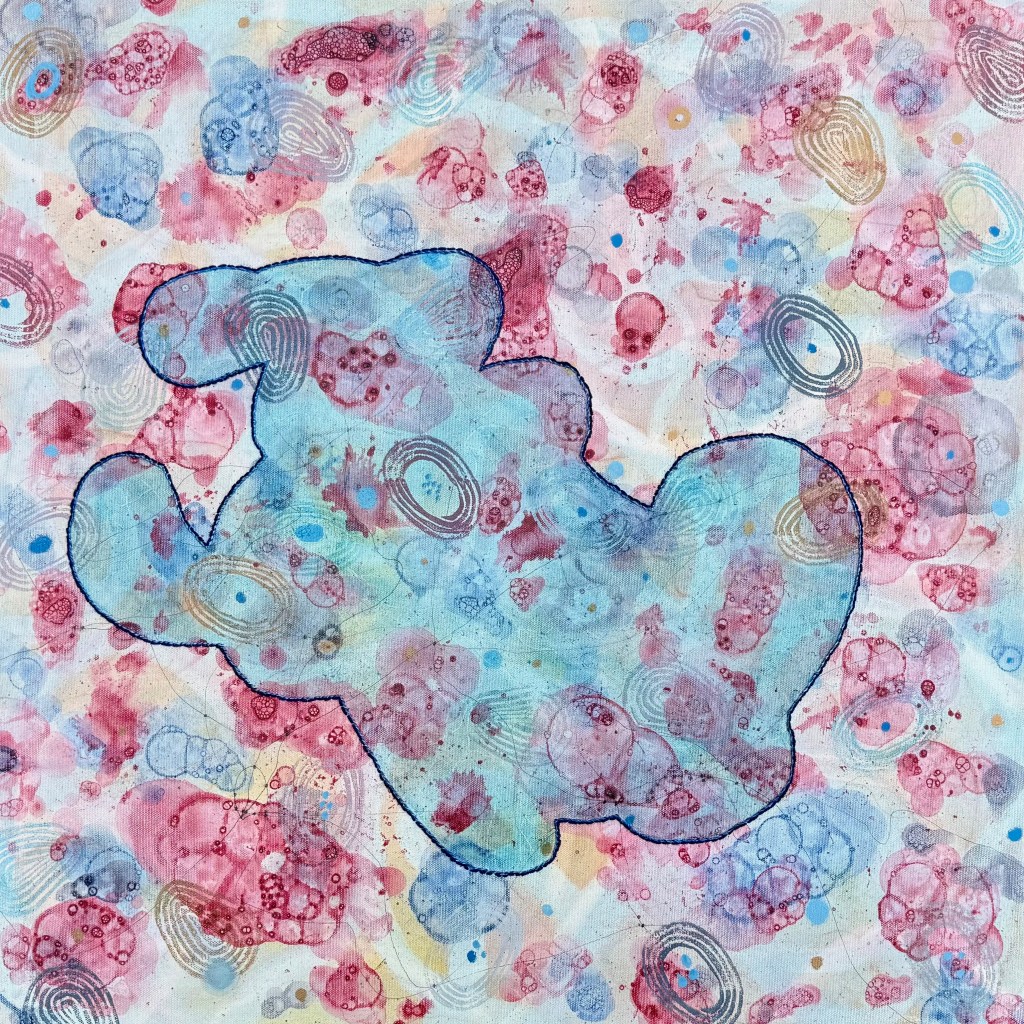
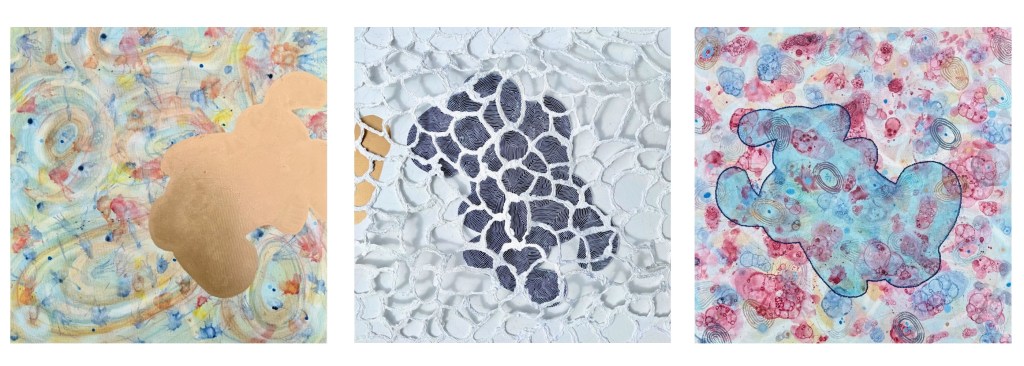
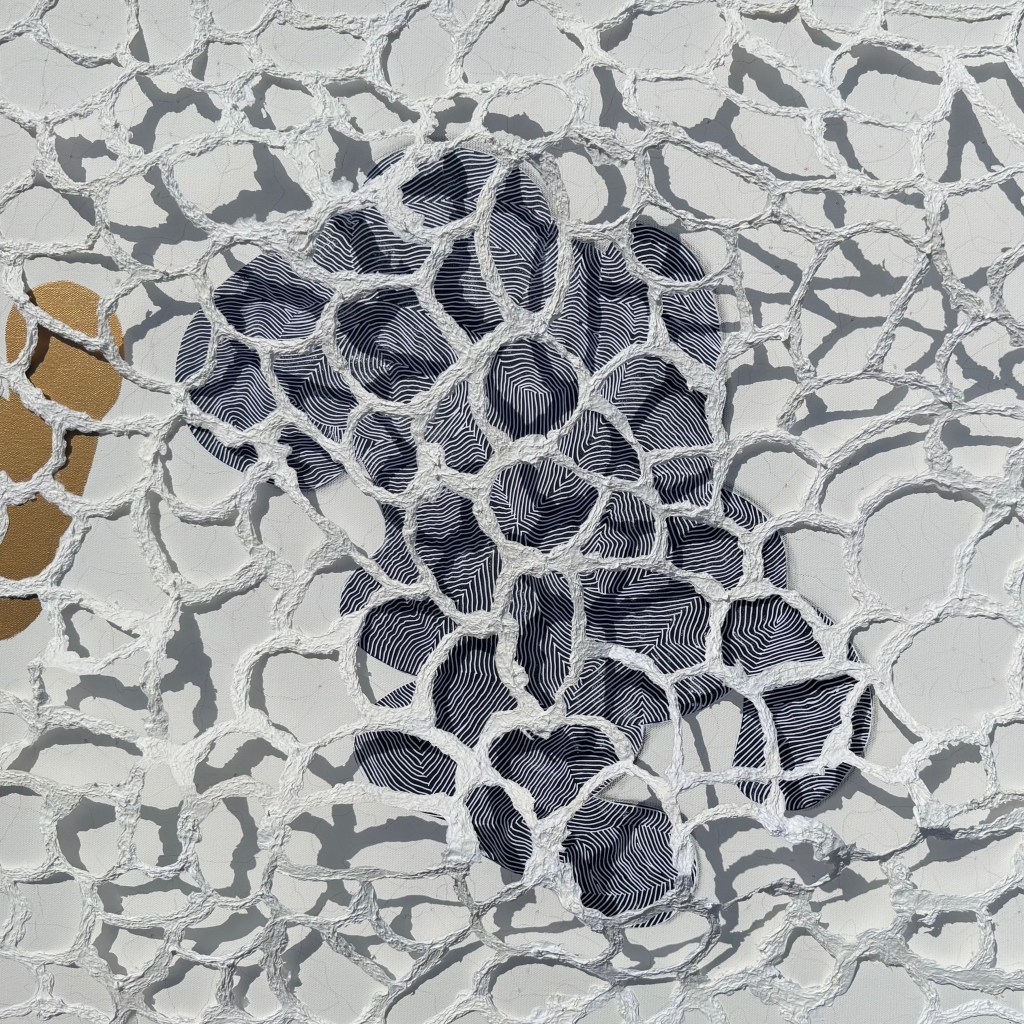
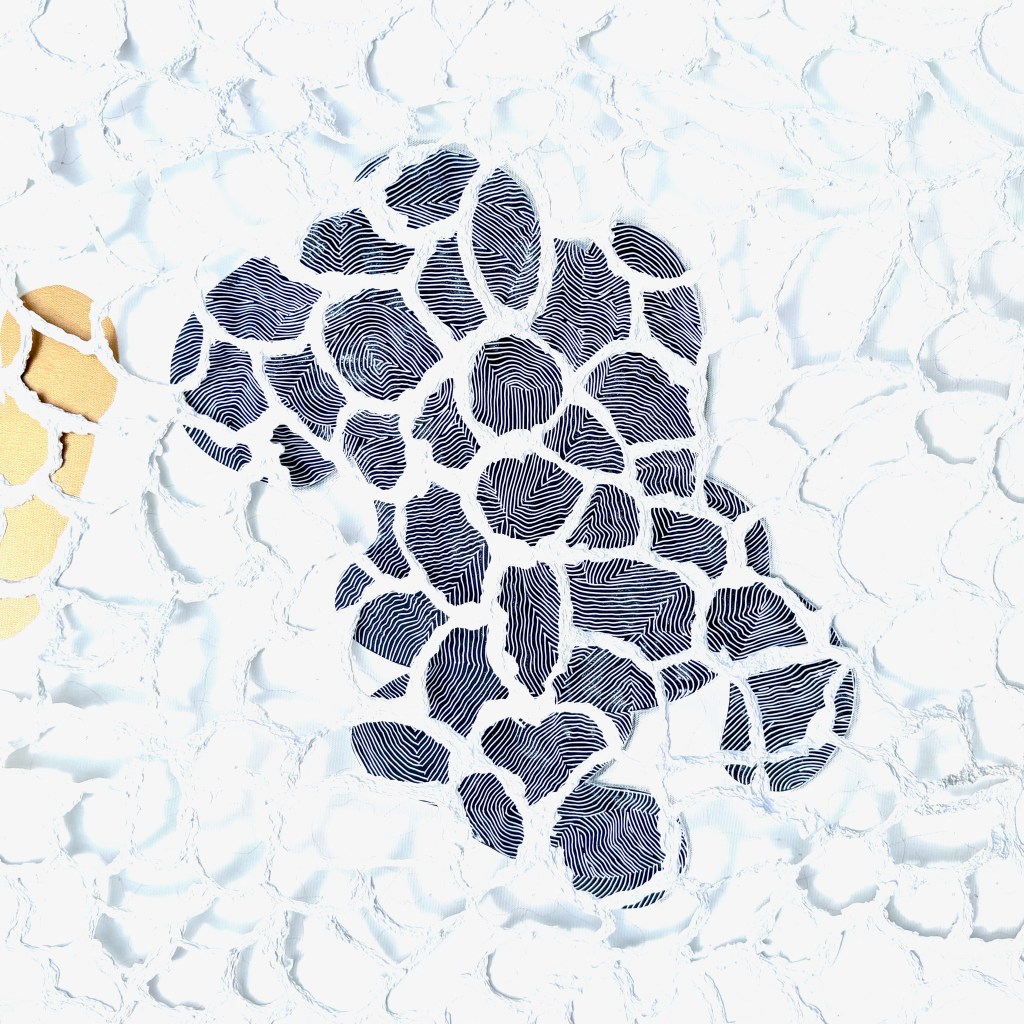
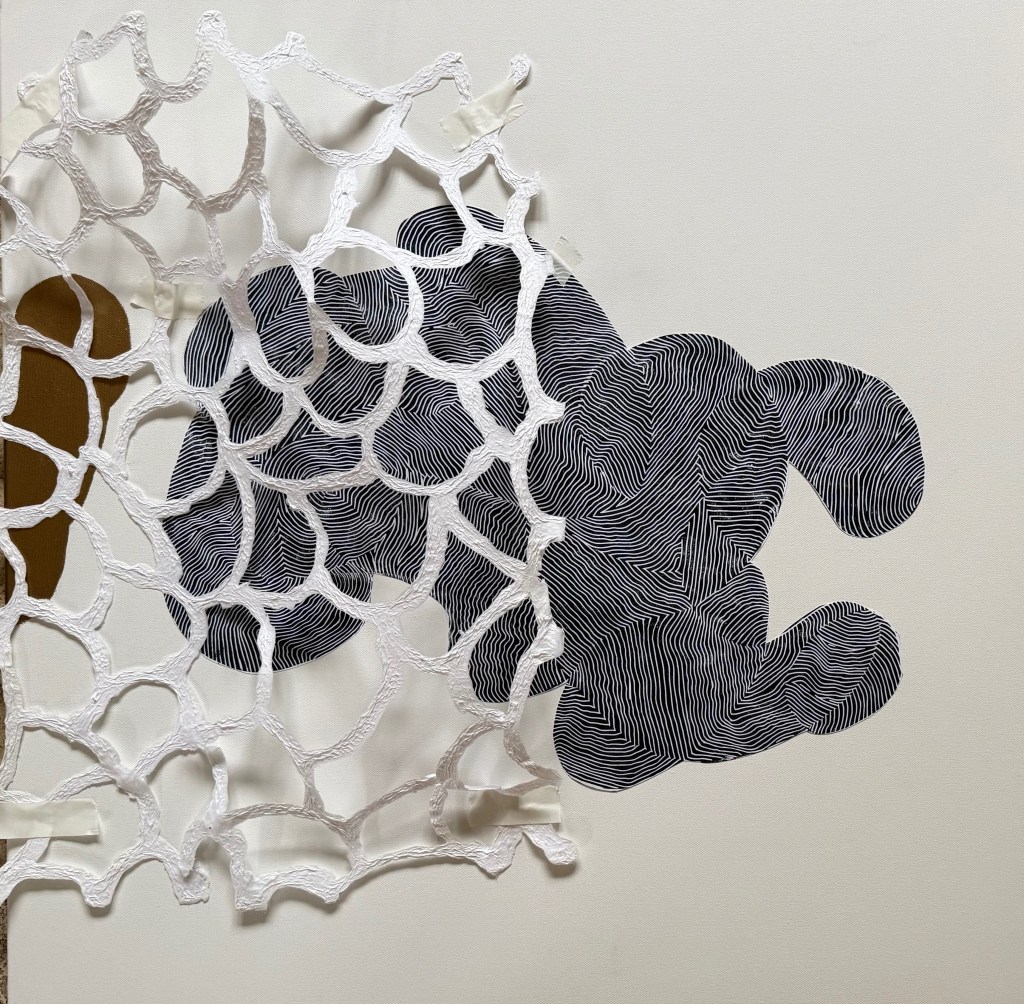
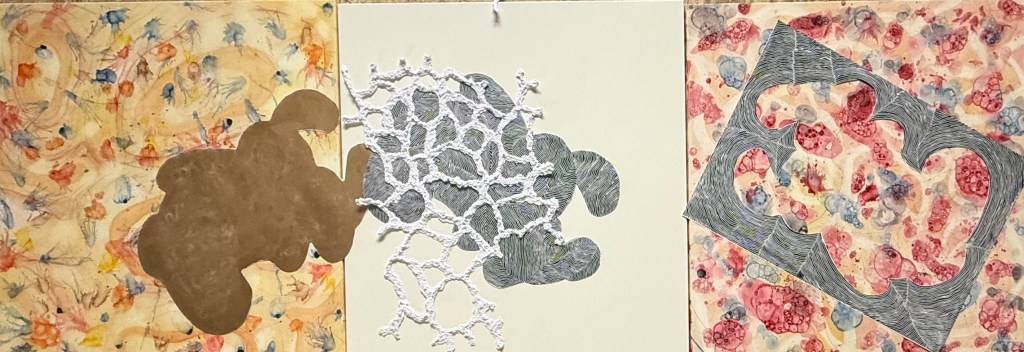
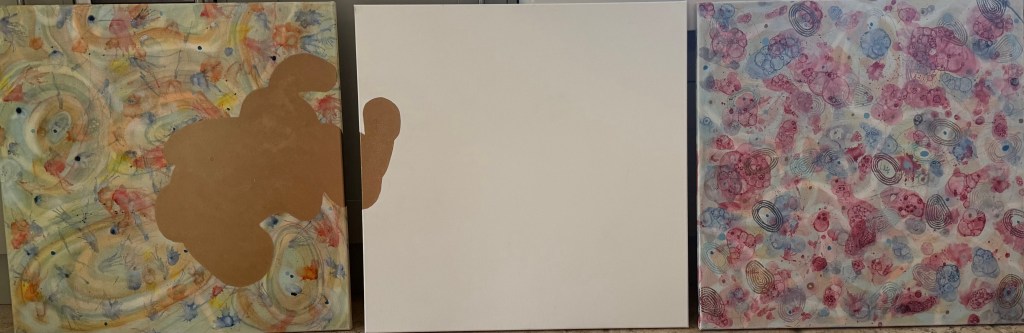
I decided that the shape on the blue canvas needed some oompf, and so I filled it with a blue glaze. I think it looks better. I managed to make a large sheet of paper lace – it took an age to dry with all the wet weather recently, but this weekend was a godsend. it dried less flexible than I was expecting but it’s workable. I decided to go with the simple shape in the end for the middle canvas to keep the sense of connection between the three of them. I overlayed the paper lace and am quite pleased with the result. My initial thought is that perhaps the central canvas now dominates a bit, but as I have taken to it representing me, I’m not that bothered, perhaps I’ve made it so subconsciously. I decided not to go with an umbilical cord – I’m liking the separation between the shapes – the drift – disconnection with the possibility of reconnection.
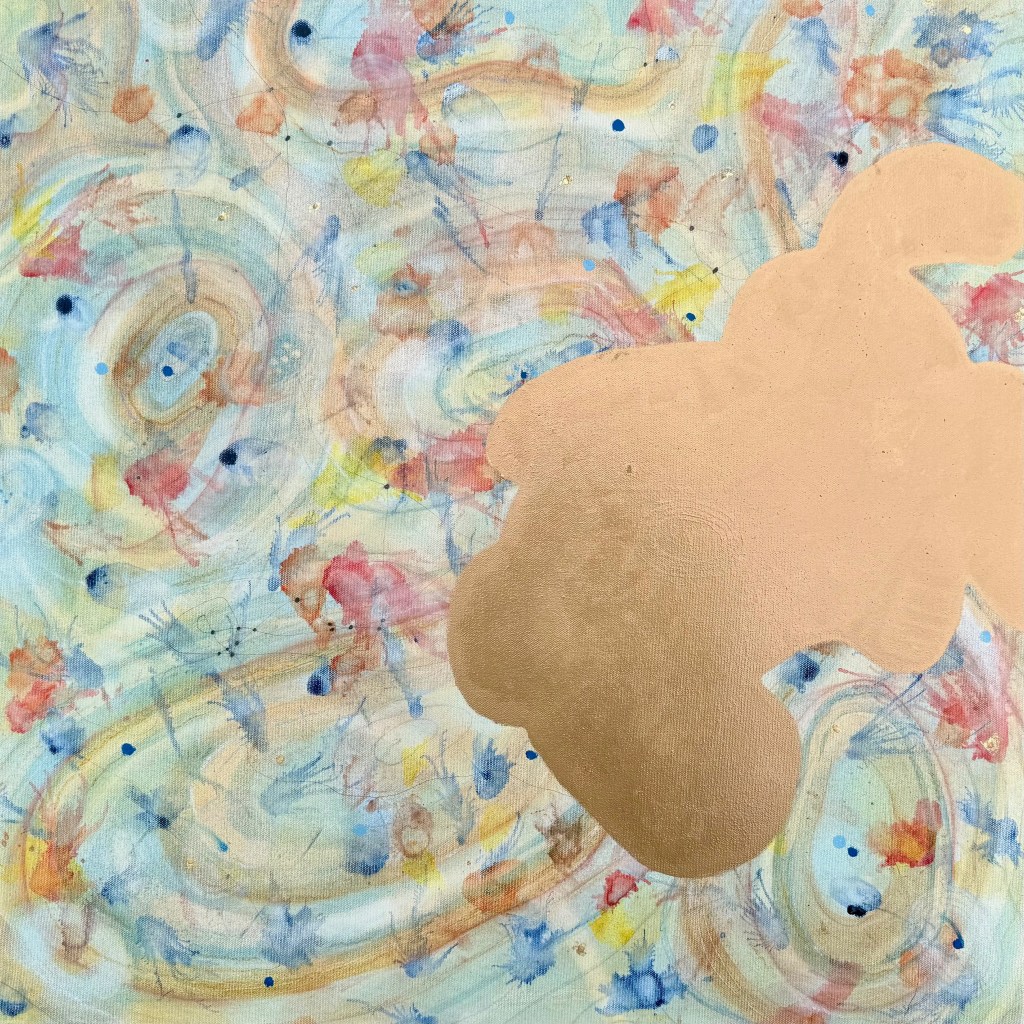
All together as a triptych:
I photographed the middle canvas in the sun – I love the shadows which are created:
I also overexposed it – something to think about for the future – it’s reminding me of colllage:
I made a short video showing the stages of making:
Now just to make a few adjustments to the videos I plan to show and also to finish making the books. To this end I’m not going to post again until they’re done – I’ve got to give myself a chance! I’ve decided to format the whole blog and then see if it is possible to incorporate it into 2 volumes by increasing the number of signatures in each one – at the moment there are 10 making up to 200 pages. I’m thinking that I could stretch it to 12…
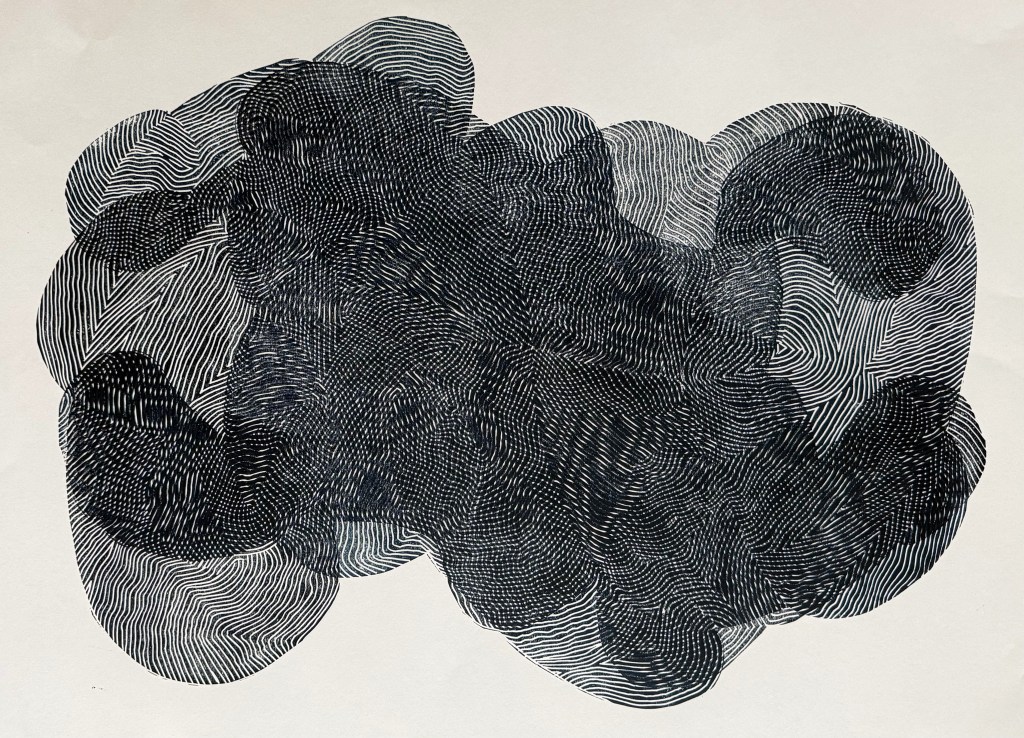
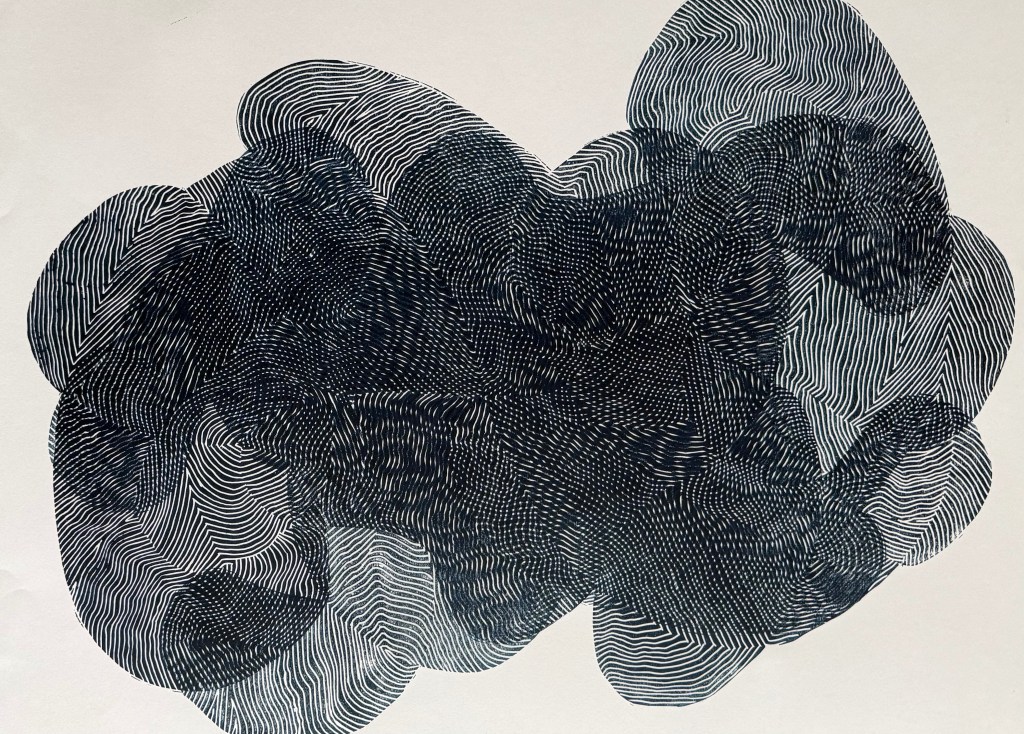
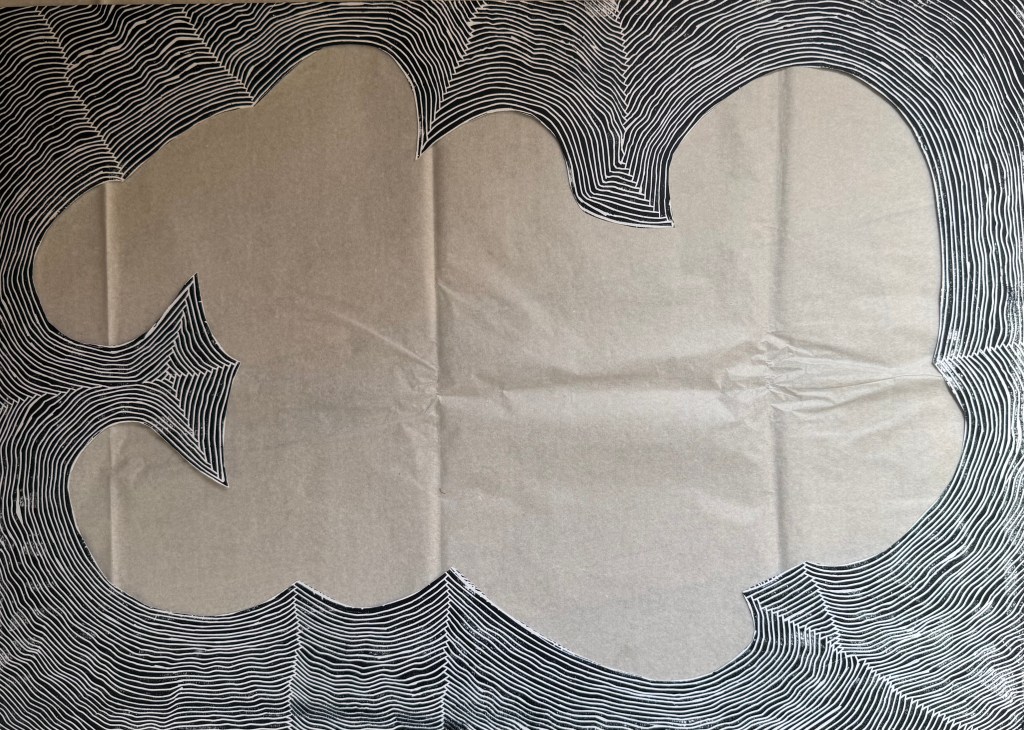
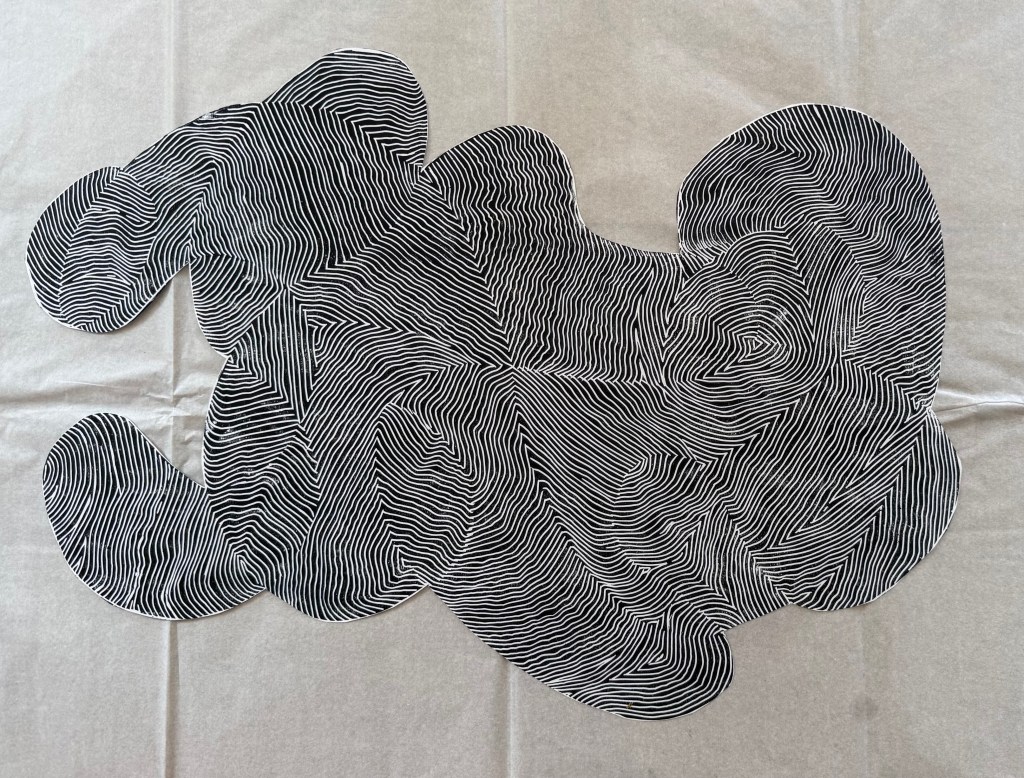
I’ve been continuing to work on the canvases. I’ve decided that instead of printing the shape on the second one, I will collage a print – printing directly could be quite tricky and so I decided not to take any risks which might involve having to source another canvas and to reprint the gold, which takes quite a while to dry. I’m not sure yet whether I’ll use a single shape or one that’s been overprinted, which could represent my paradoxical nature or make me different to the other two – whilst making them I’ve decided that the second canvas somehow represents me. I made some prints overlaying the lino:
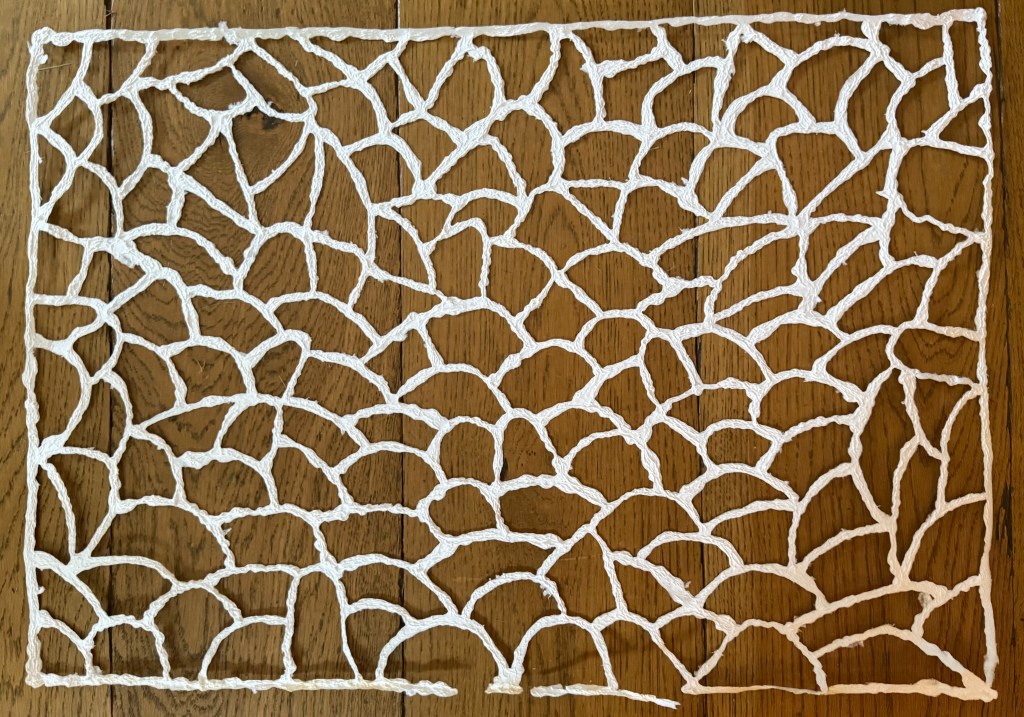
The konnyaku powder has made a world of difference to the paper lace making. It seems much more flexible and less prone to breaking, but time will tell. I’m currently thinking that I will create some form with it over the canvas – pushing it up in places and holding it in place with some stitching. This way hopefully it will add the extra dimension of creating shadows.
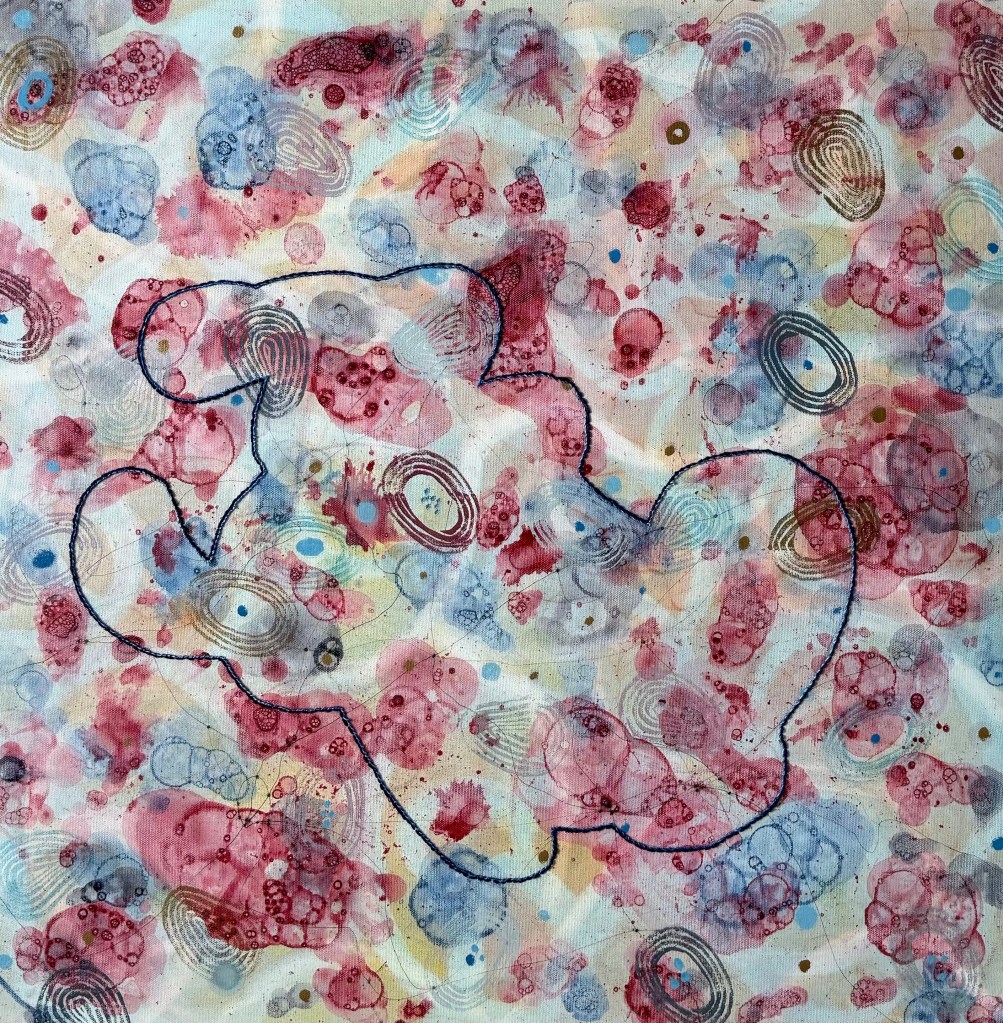
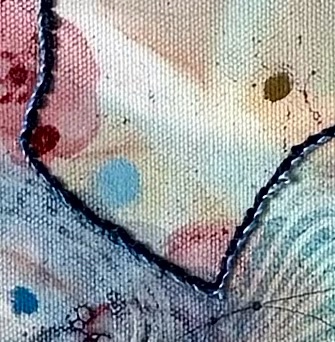
I’ve stitched the outline of the shape onto the third canvas. I used a graduated blue thread, but this turned out to be too subtle so I went round it with a darker blue – I really like the effect of the combination.
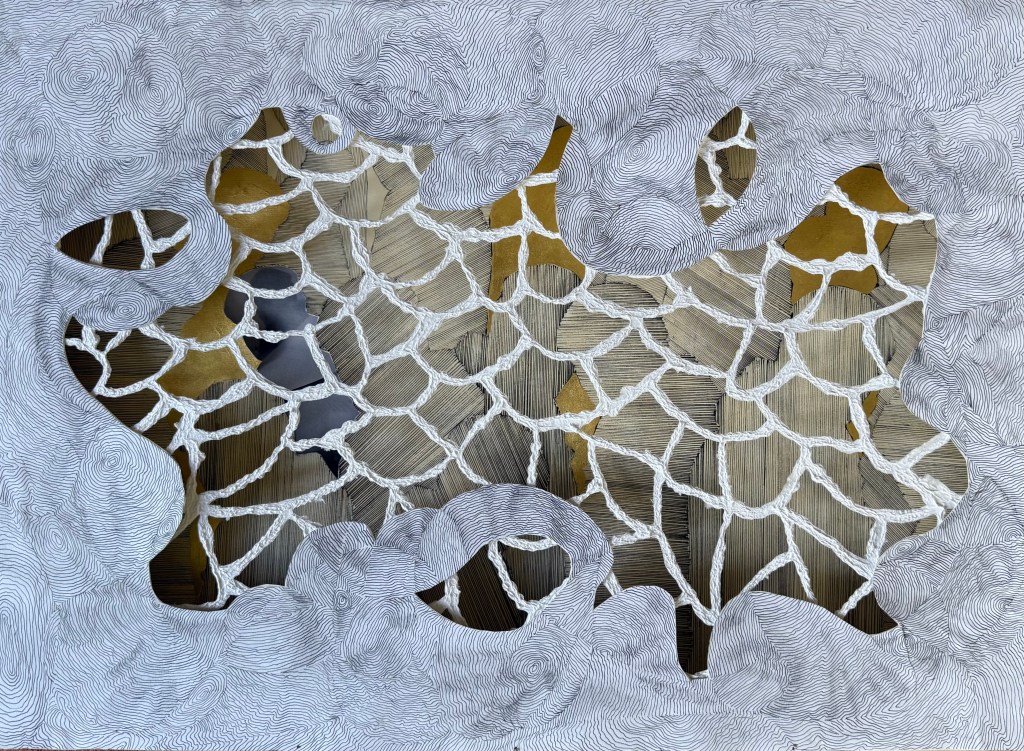
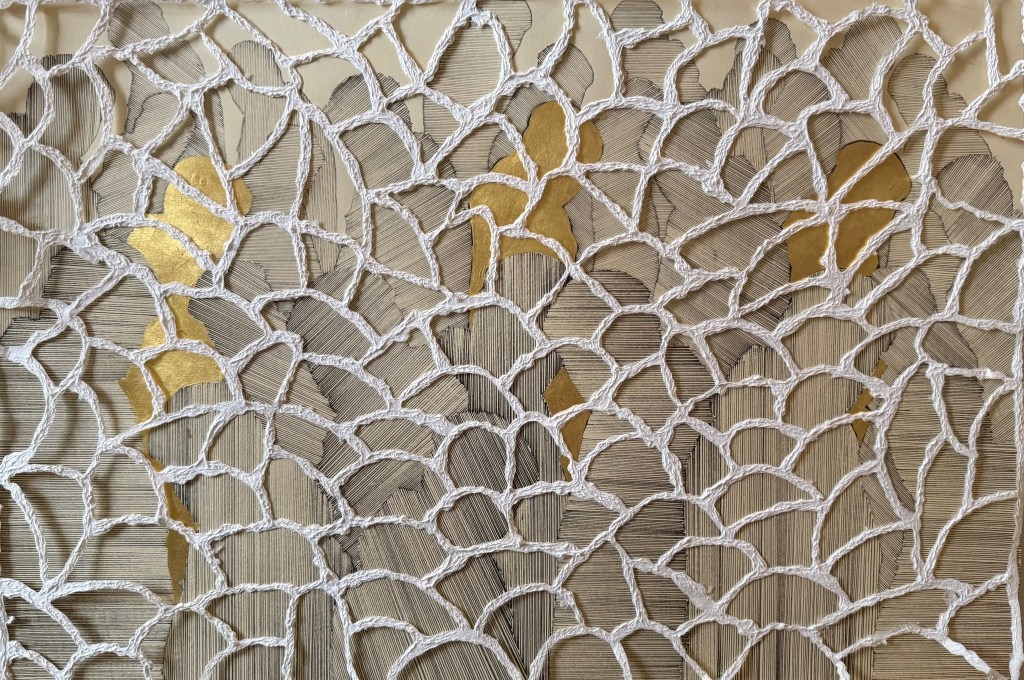
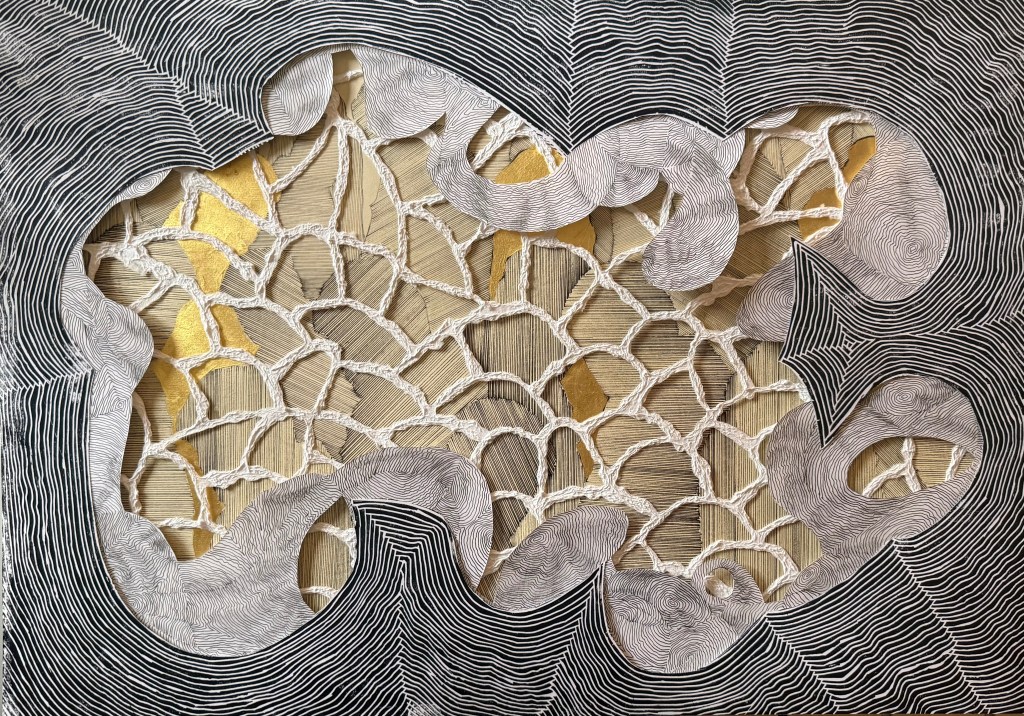
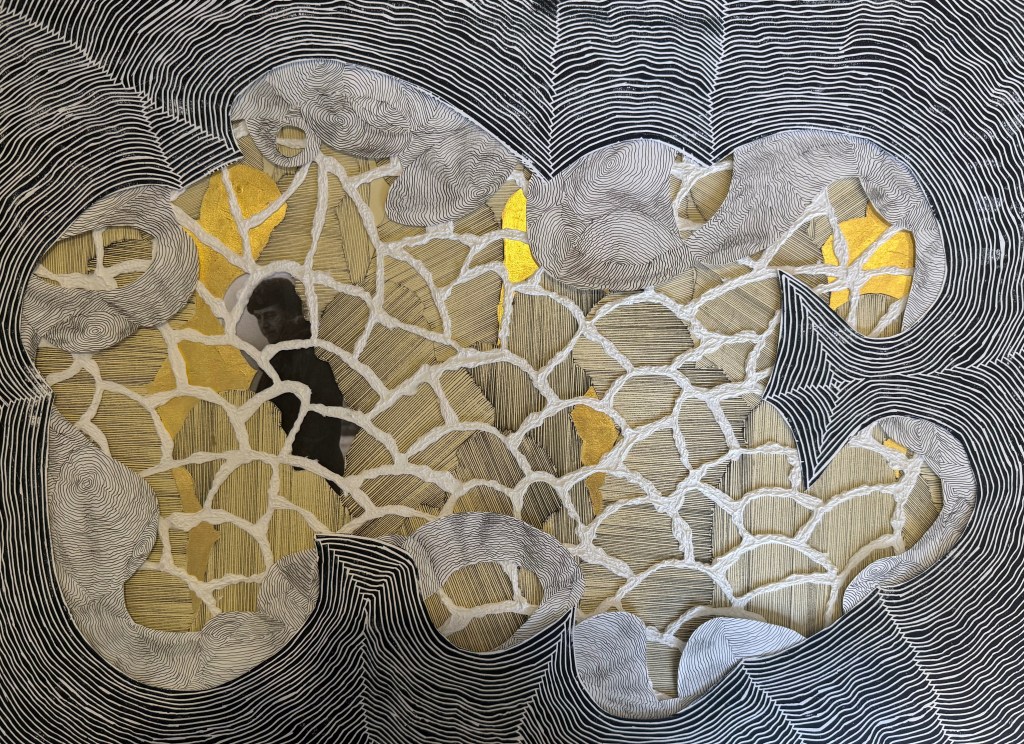
I managed to use a narrow syringe to make some paper lace which I’m thinking about using in the layered piece. I’m going to use the line drawing of the silhouette of my father with the gold as the base layer and then have the paper lace plus a couple of other layers. Whilst experimenting it occurred to me that I could have the actual image as the base layer. It stands out too much in the photo so I’m going to try putting some sheer fabric over the top to knock it back a bit. The layers are also just lying on top of each other. Once I’ve decided how I’m going to layer them I plan to use some wooden spacers used for framing to create the gaps in between.
I like how the top layer is the border from the print and together with the use of the paper lace creates a connection with the canvases, making everything more cohesive. I’m now thinking that I might try creating lace with the shape of the silhouette and see how that looks, rather than the current pattern that could be said to be a bit random. As I’m thinking that I might put the red thread on the top layer as I have done previously, it would mean that it would be less busy.
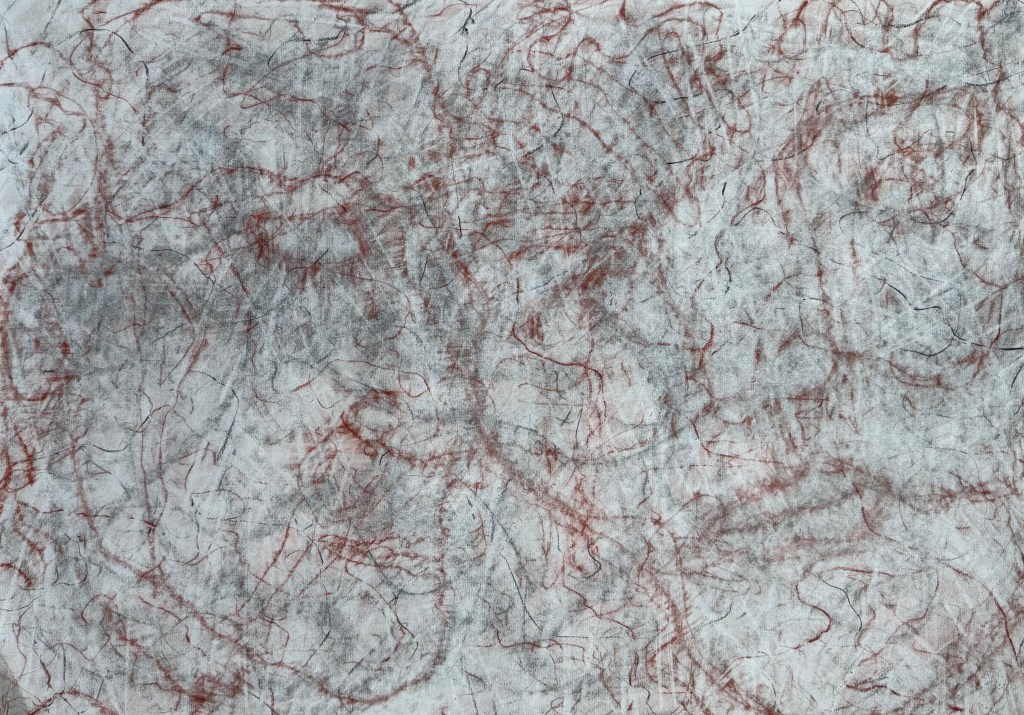
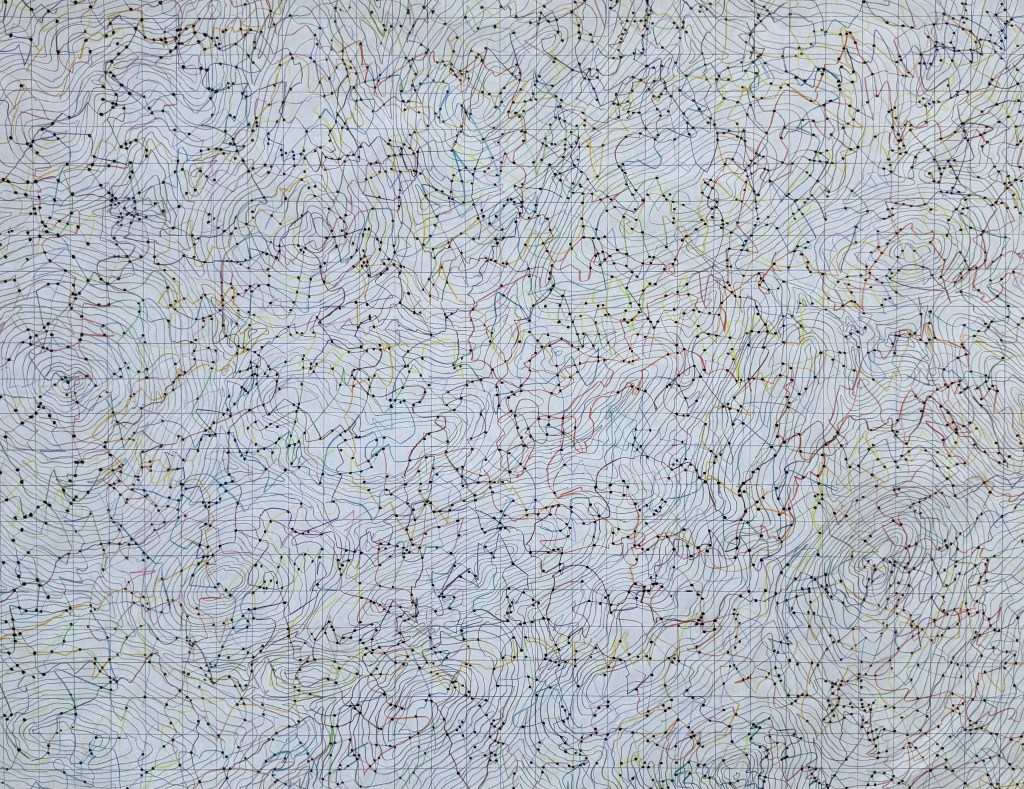
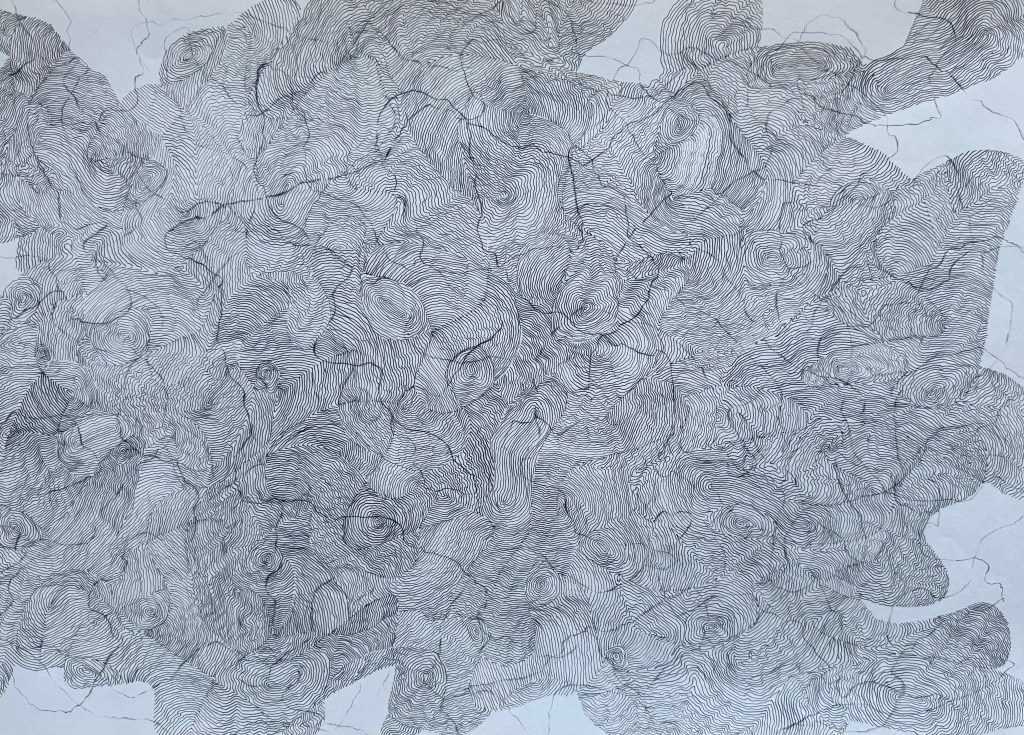
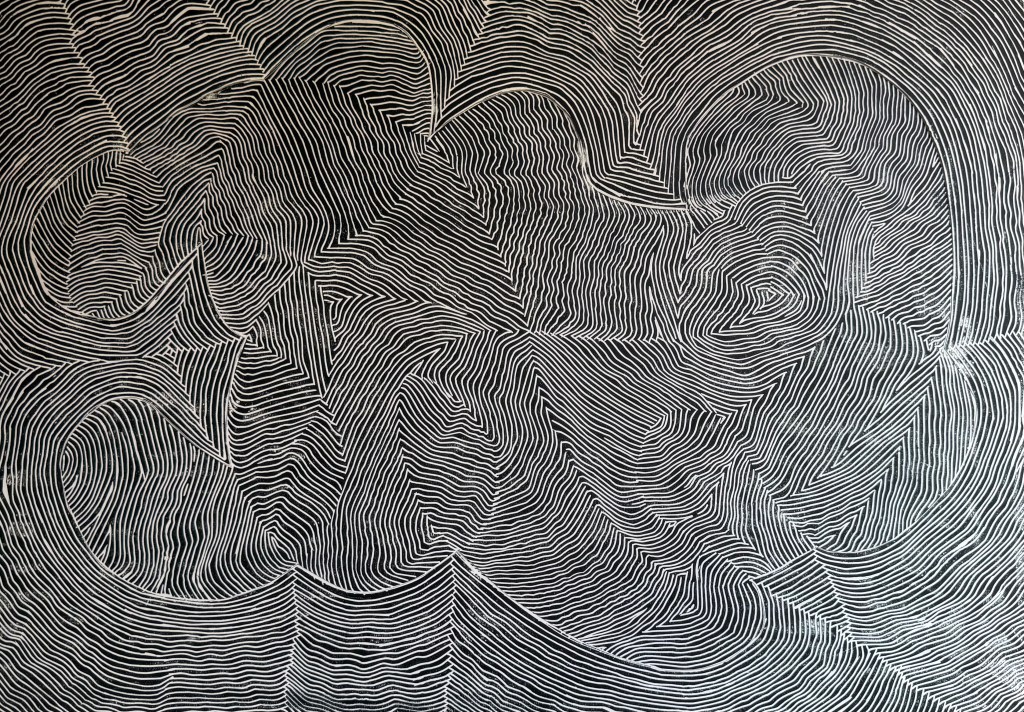
In the meantime, I’ve discovered that it’s the deadline for the Trinity Buoy Drawing Prize tomorrow, so I thought that I would take advantage of the student discounted entry fee and enter some work. I chose the pencil and pastel drawing from Do I Have to Look?, the map I drew in Late Night Ramblings and my latest drawing experimenting with organic non-straight lines. I’m not holding my breath.
But I feel as if I’m making some progress, and I’ve realised that I haven’t posted about it yet – I’ve been so caught up in it.
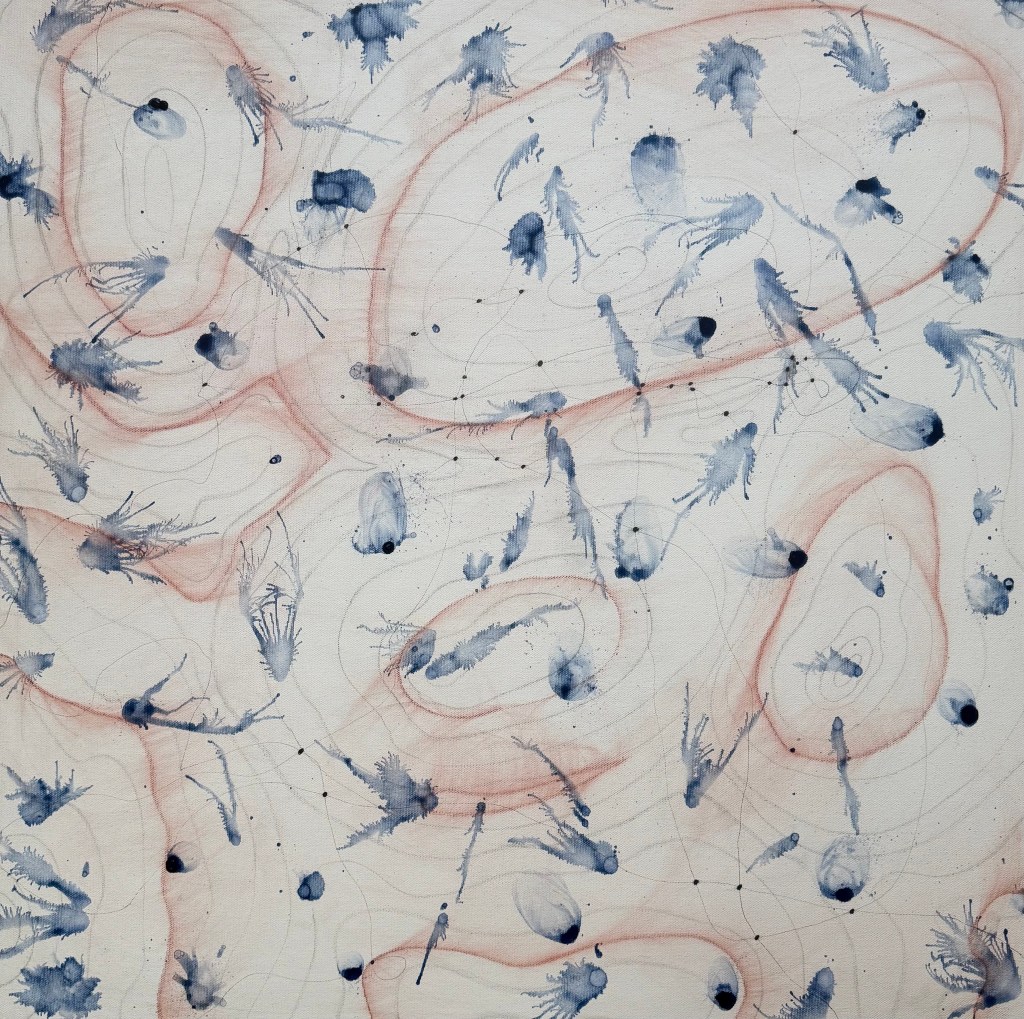
I took 3 70cm x 70cm canvases I had knocking around from a previous project several years ago. I did some automatic drawing on both of then using a fine liner pen, some charcoal and pastel. This step feels important as it has been my constant over the last two years.
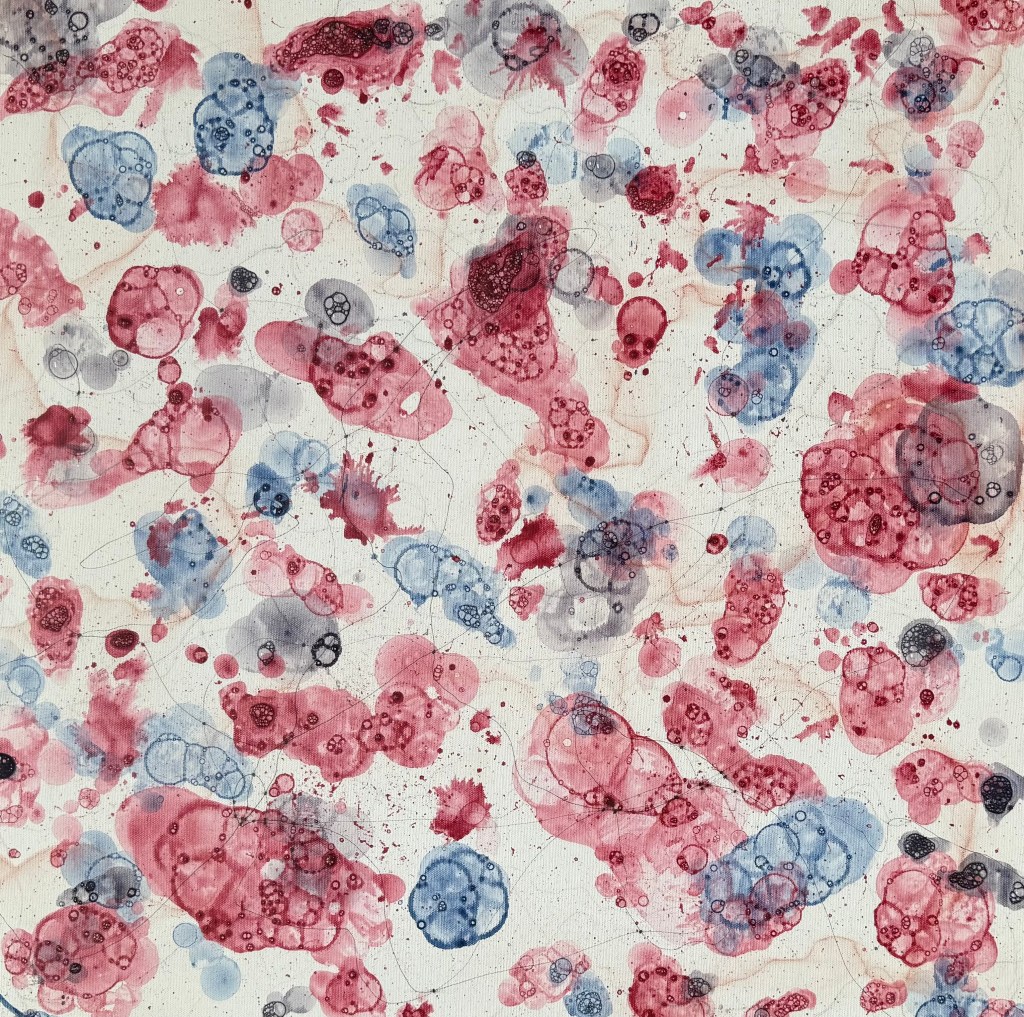
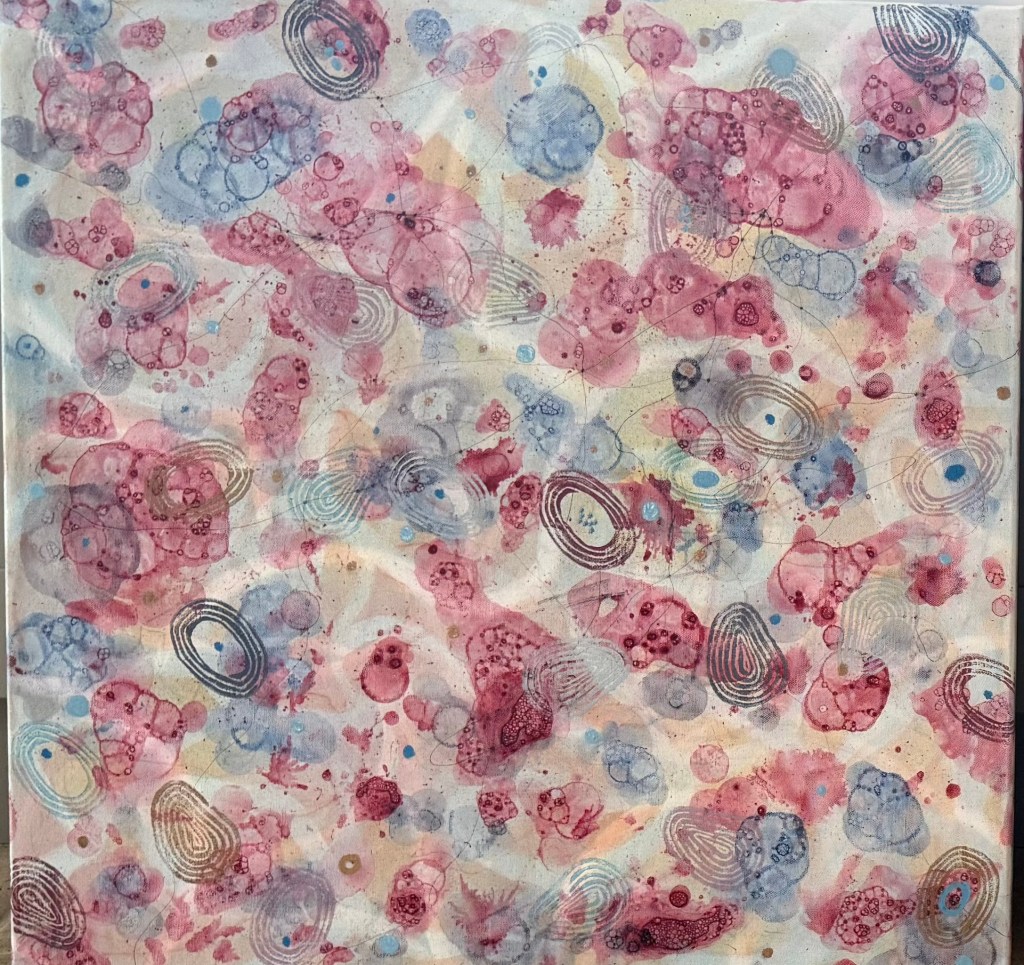
On 2 of the canvases I used acrylic paint and soap solution to experiment with bubbles and also dropping the solution and blowing using a straw.
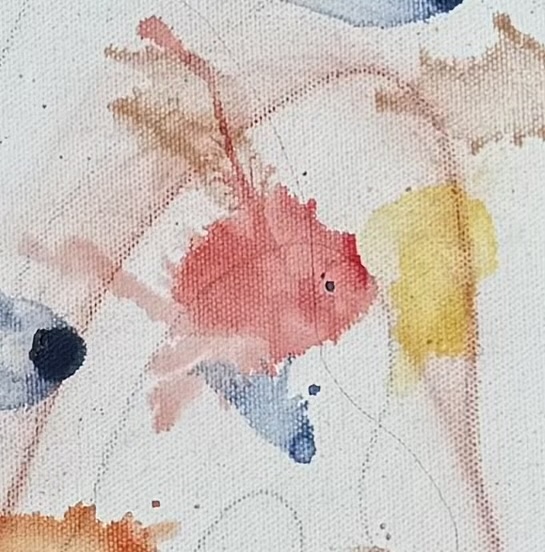
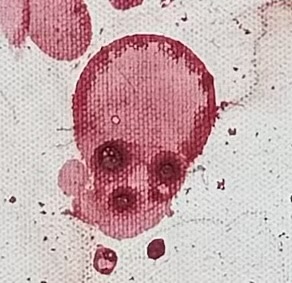
I love how you can see things in the shapes:
A goldfish and a skull:
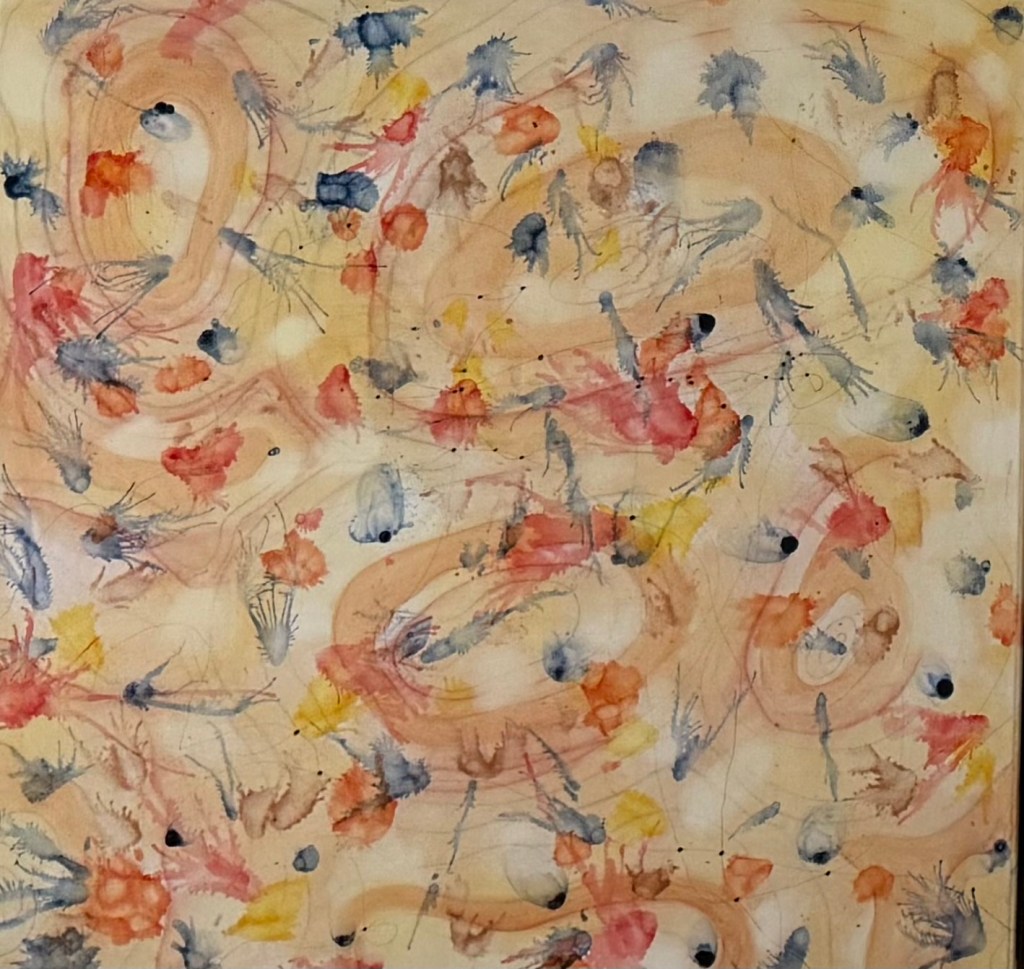
I then applied glazes of oil colour, wiping back in some areas to keep some light.
I then applied a Prussian blue glaze over the entire canvas and wiped back:
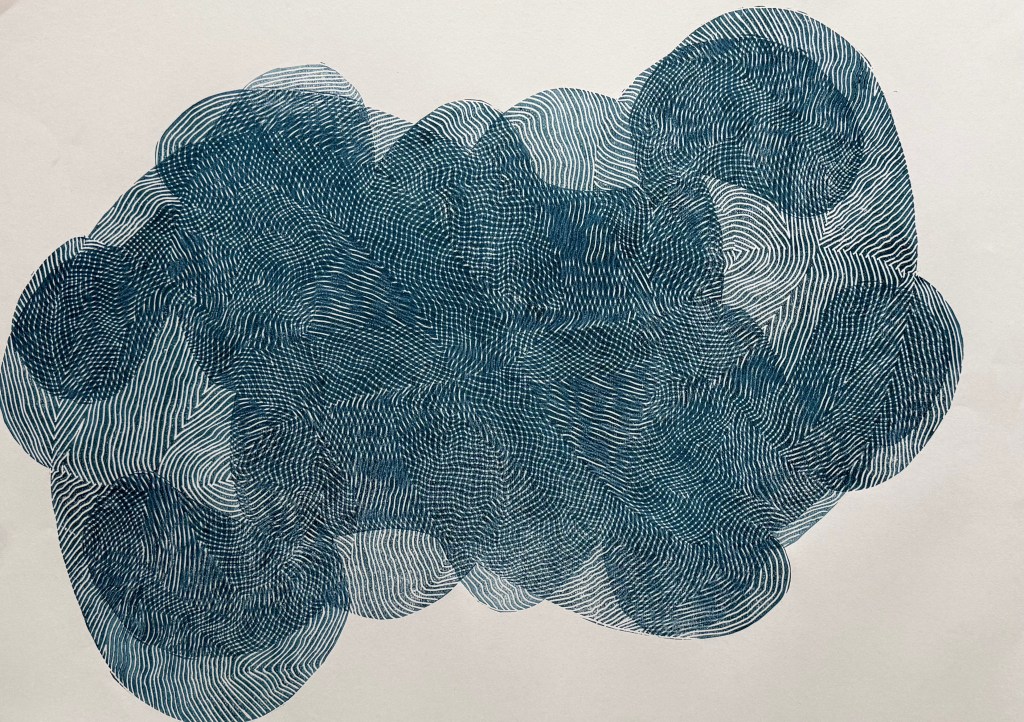
I decided that I wanted to put the same shape on all of the canvases, the third being left blank apart from the shape which I’d print on it. I’d previously decided against the shape I’d used before, but then changed my mind. I like the shape and I’m going to use it as a repeating motif. So I scaled it up to A2 size and cut the lino this time using more organic lines rather than the straight lines I used previously.
I then applied some small lino prints to the red and blue canvas. I tried on the orange and blue canvas but it didn’t work so I wiped my trial prints off.
I then decided on the order of the canvases working out how the shapes might be arranged. I liked the idea of the middle canvas being quite limited but perhaps overlaying a piece of paper pulp lace as it’s reminiscent of cellular structure or membrane. I’m planning on stitching the outline of the third shape which is why I quite like that the canvas has quite a bit going on in it.
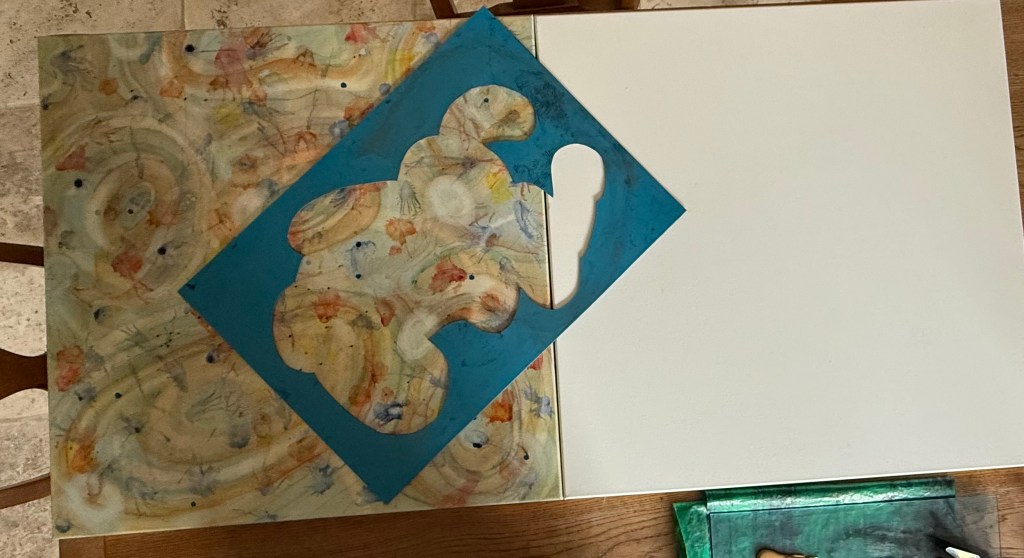
This morning I printed the first shape using the border from the lino as a stencil and using gold oil based printing ink and a sponge.
The next step is to make some new paper pulp lace as I’ve now got some konnyaku powder which should help the flow through the syringe and also make the paper stronger and more flexible. I’ll then print the shape on the second canvas once the gold ink is dry and stitch the outline on the last one.
Things have become rather unsettled at the moment.
I’m constantly battling the inner fear that all I will have for the End of Year Show is a couple of books, possibly, as I still haven’t made both of them.
I underestimated the significance of a date, although I don’t know why as I mentioned the significance of anniversaries in April. It was the anniversary of the car accident at the weekend – old feelings and memories resurfacing, being re-lived. I can’t help thinking that a general feeling of sadness and uncertainty about the future is contributing to how we are feeling – both of our times at university are coming to a close.
To be honest I’m getting a bit sick of it. It’s not such fun – I haven’t been getting the proportions of pigment to washing up liquid to water right.
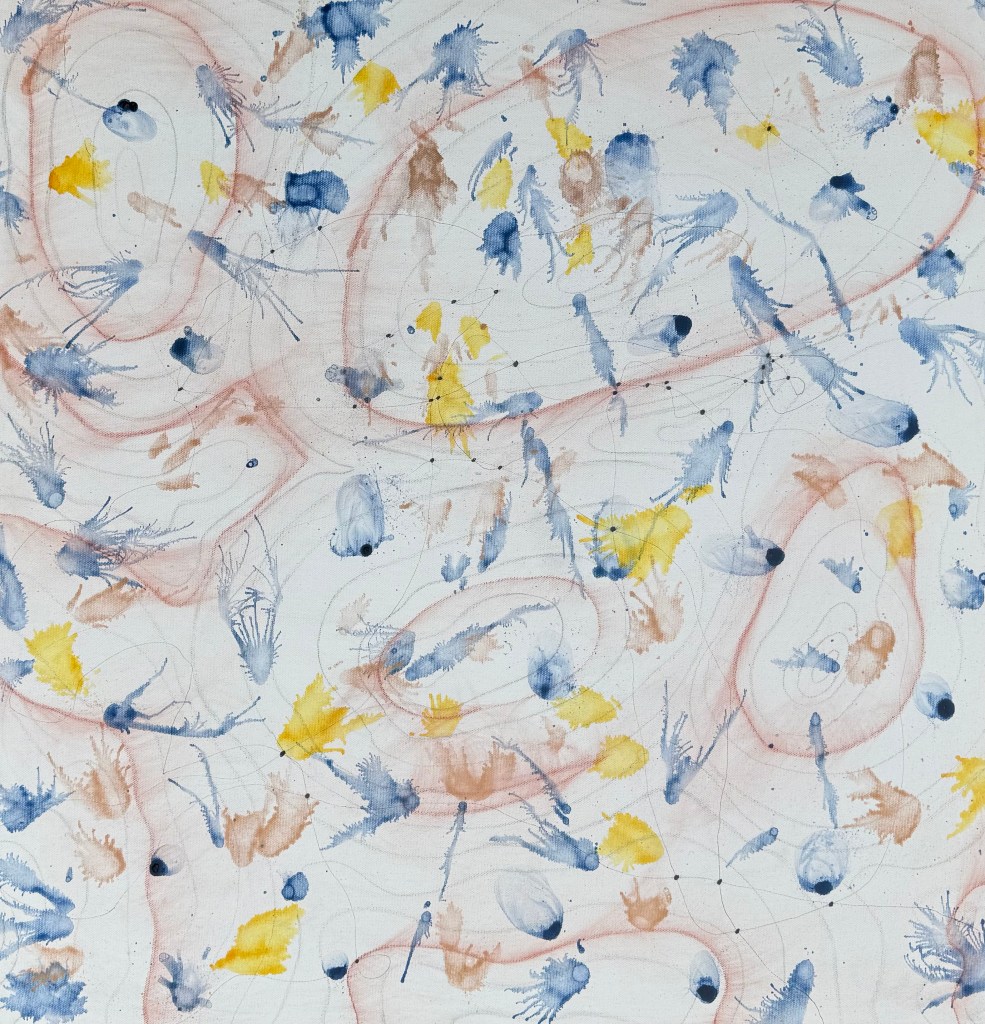
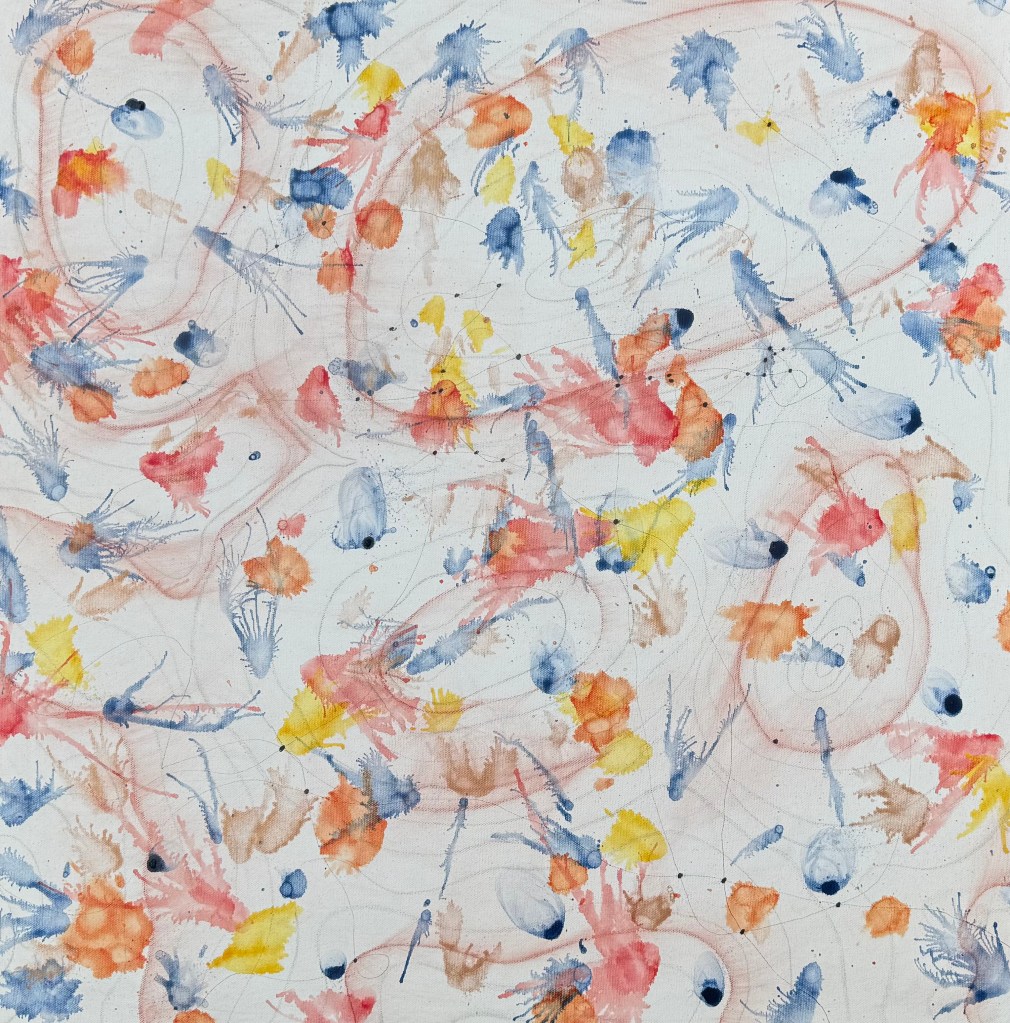
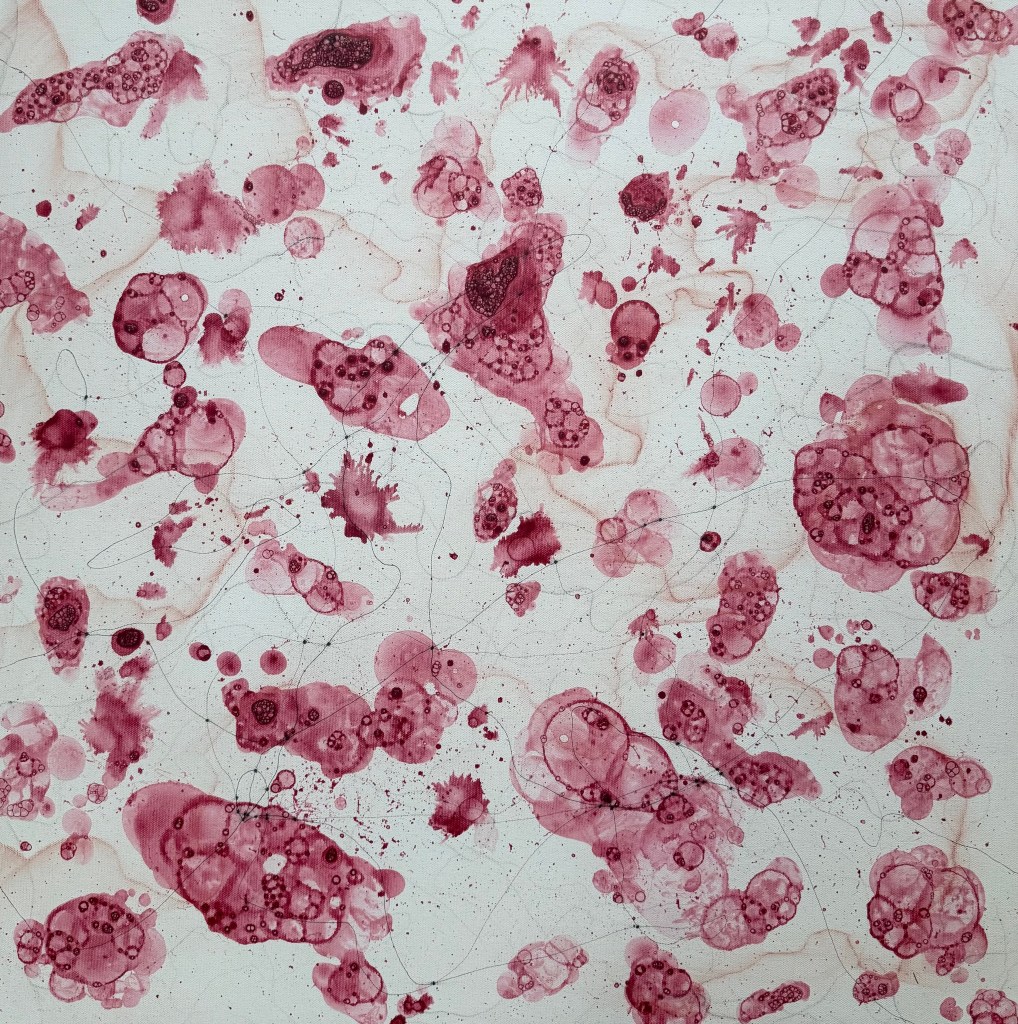
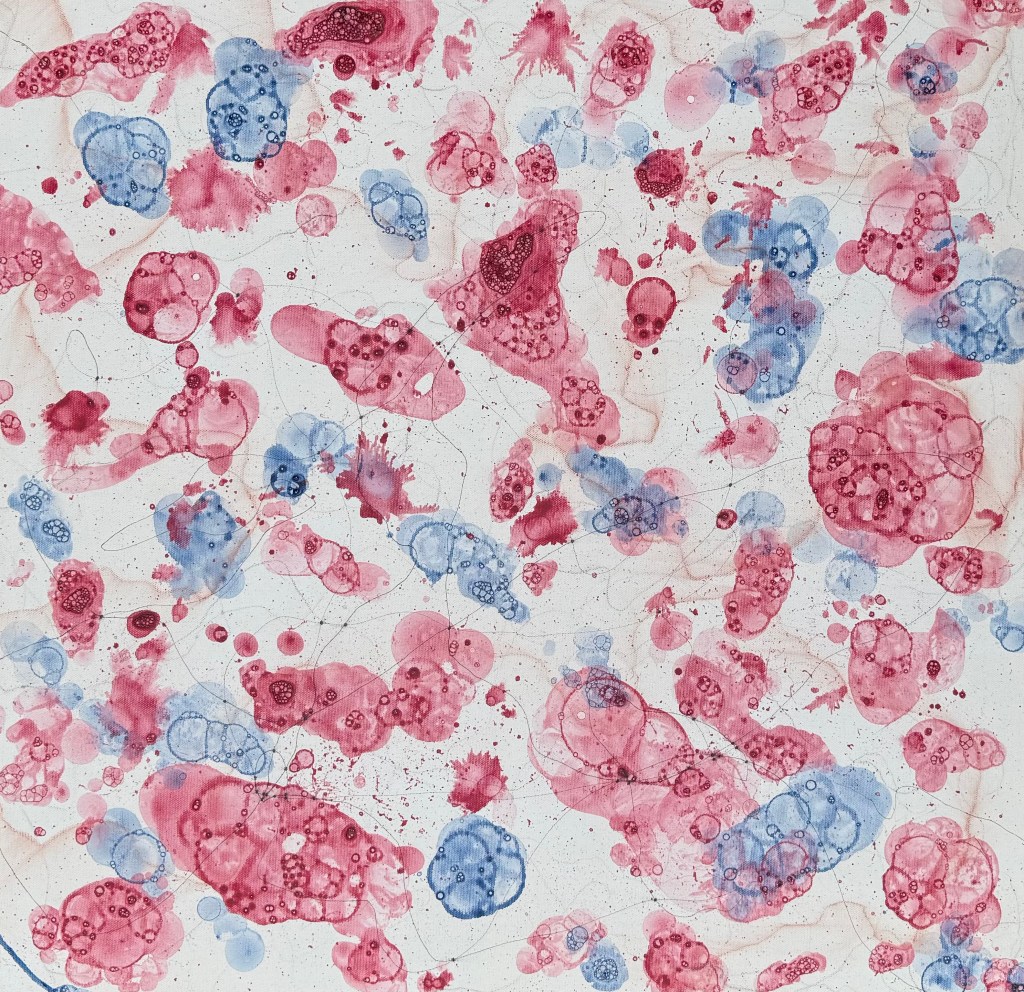
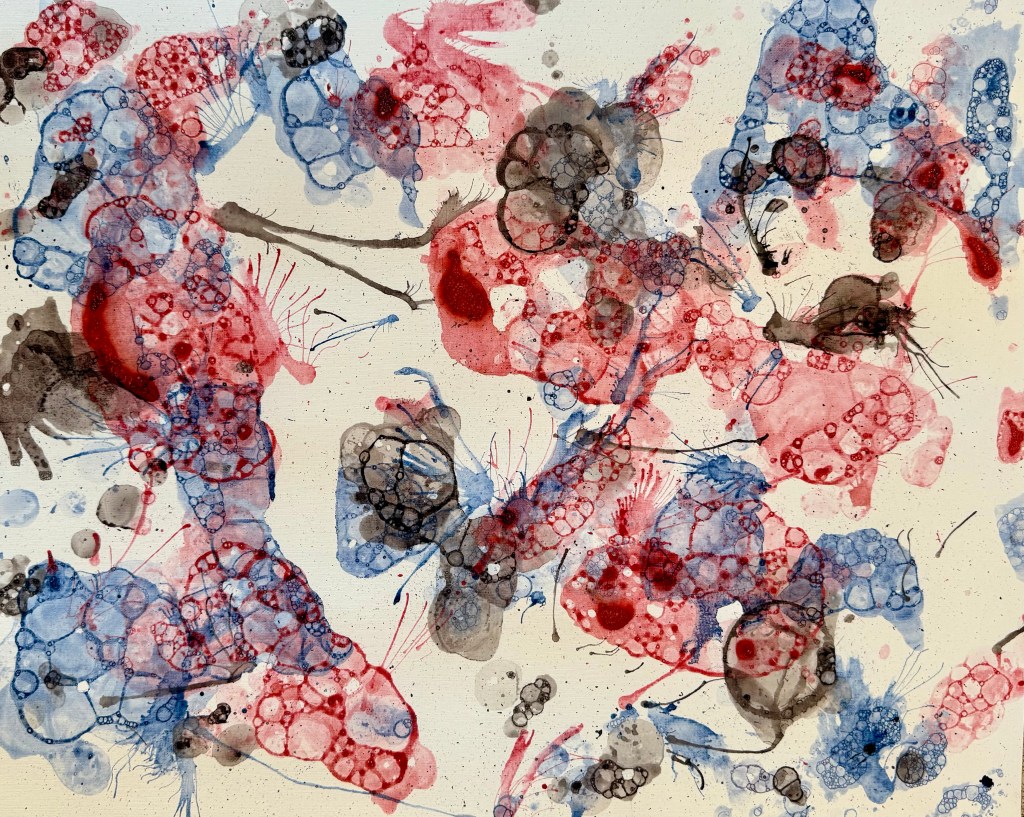
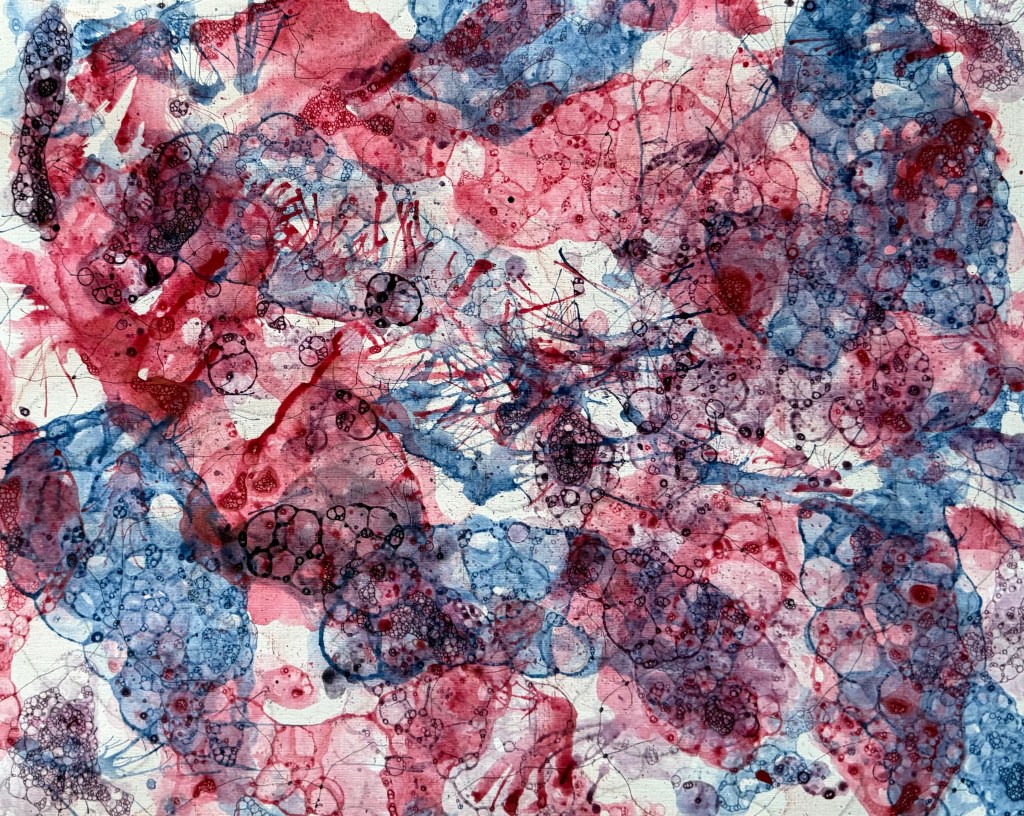
Anyway I’ve been doing some more experimenting over the very hot Bank Holiday weekend:
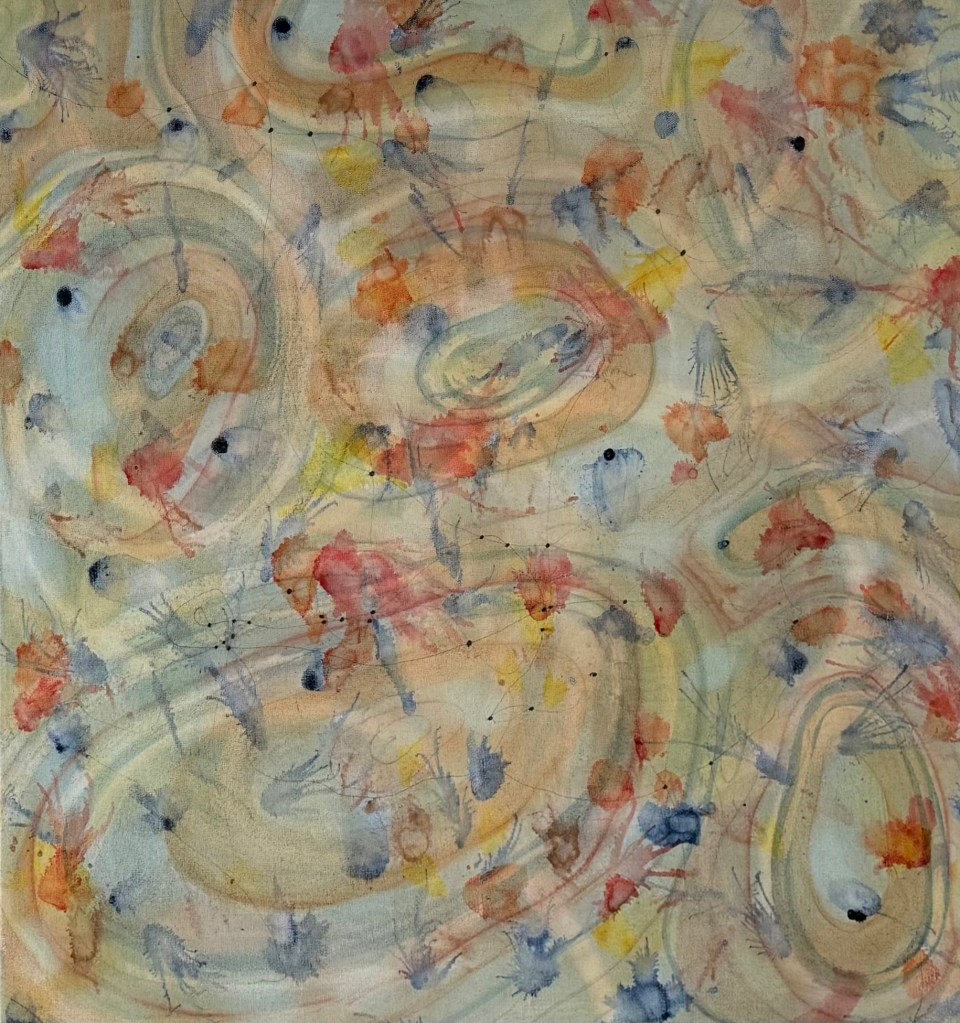
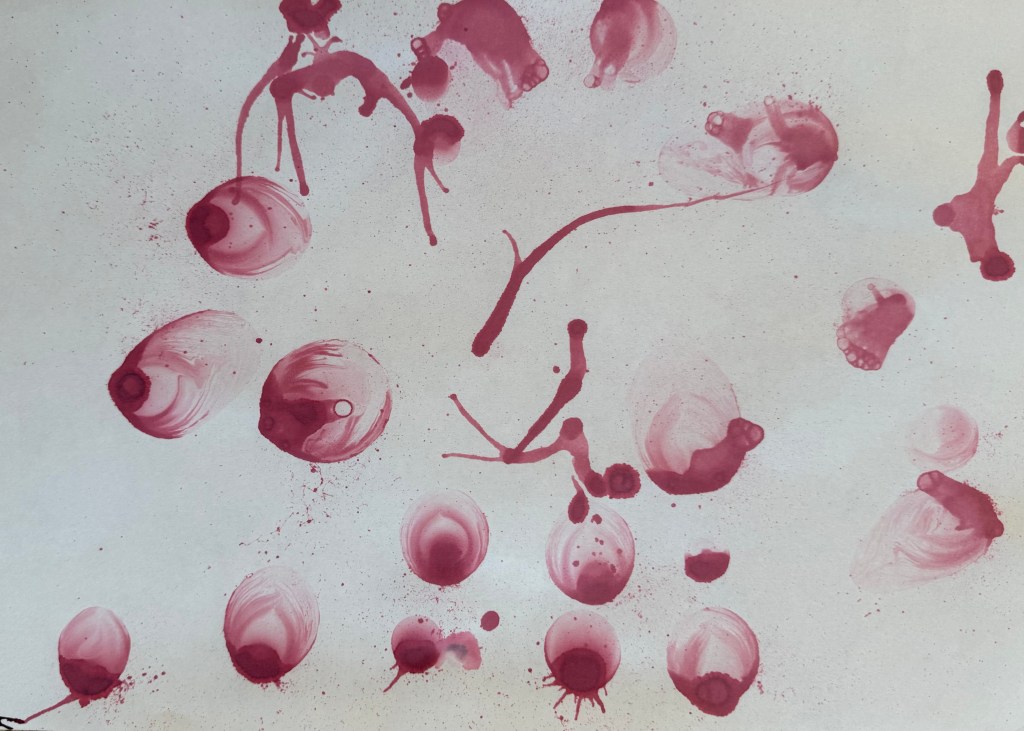
I discovered a new way of blowing in Instagram – the bubbles look more like eyeballs to me but I like the technique of dropping some liquid on the paper and then blowing with a straw so that it disperses in thin lines.
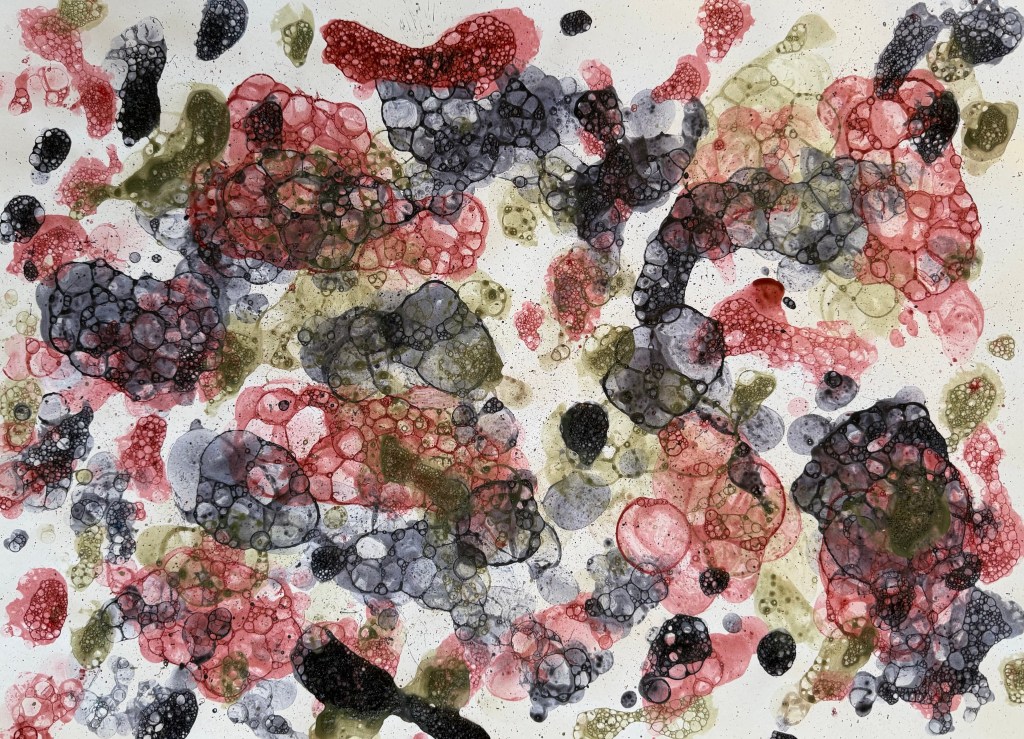
I like the white space in the first image. There are some good areas but the dark colour is too dark in places – I should avoid using the froth!. Also The green didn’t turn out as expected and my ratios were all wrong. I Like the second one and also the third one although I’m debating whether it is too much.
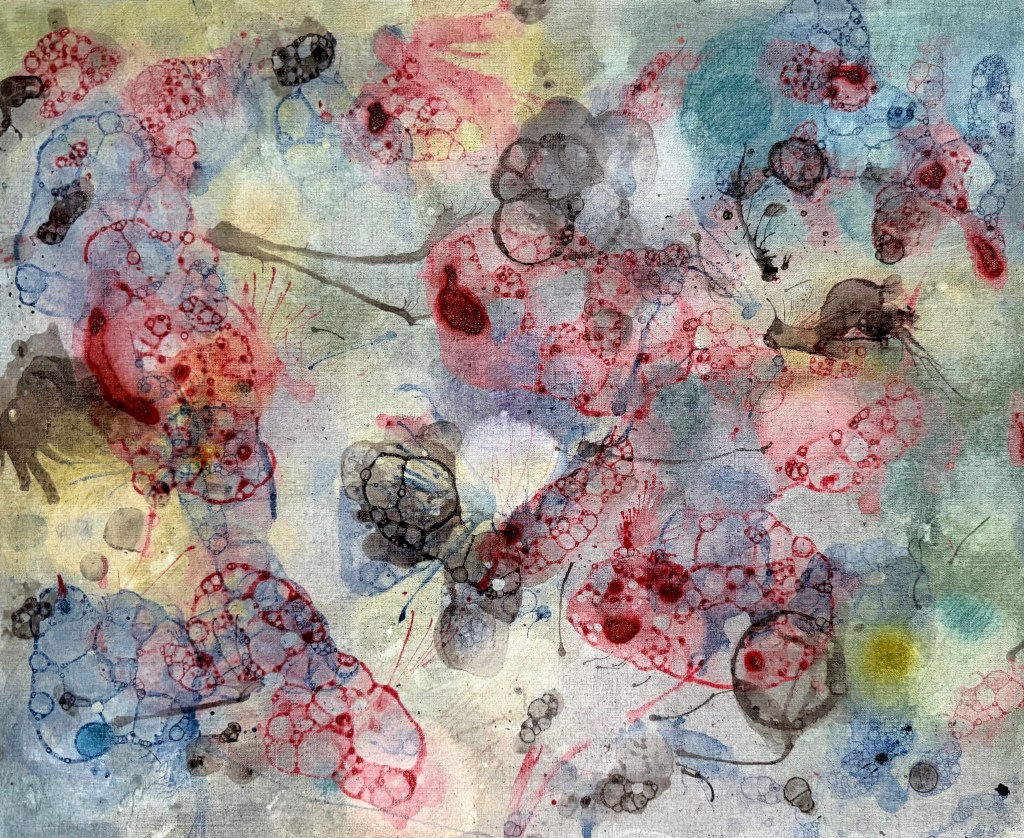
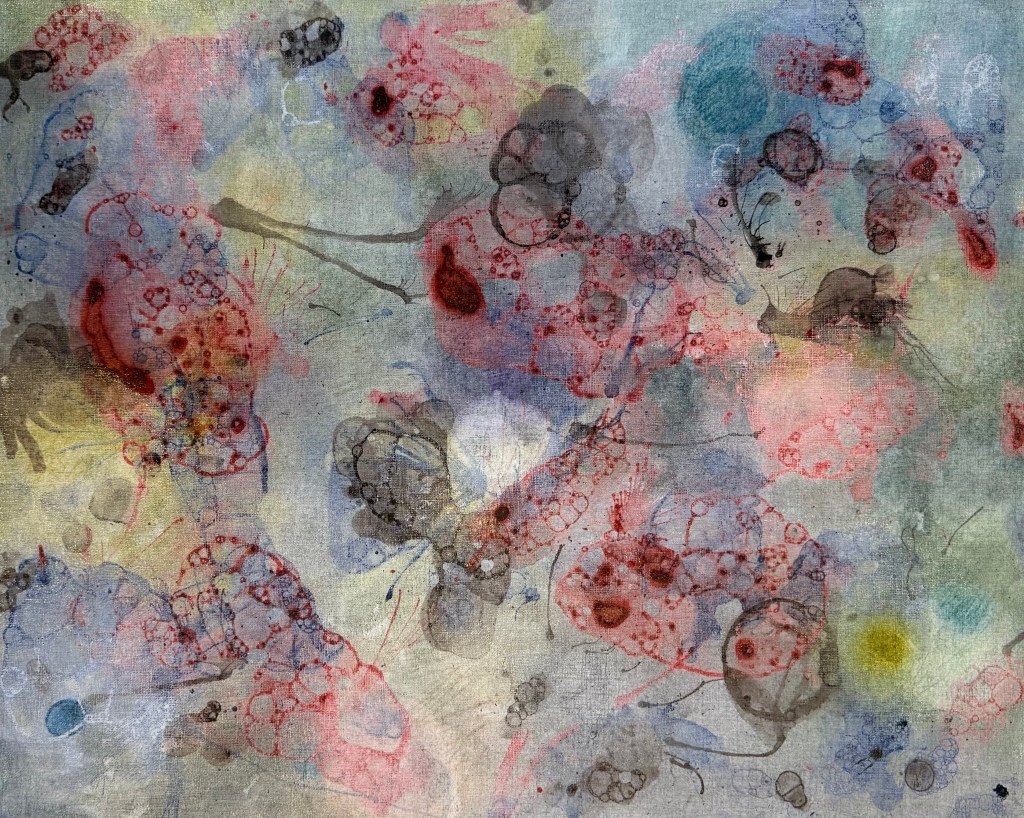
I have been experimenting on oil paper as I would like to try on a canvas and I want to experiment with putting thin glazes of oil paint on top.
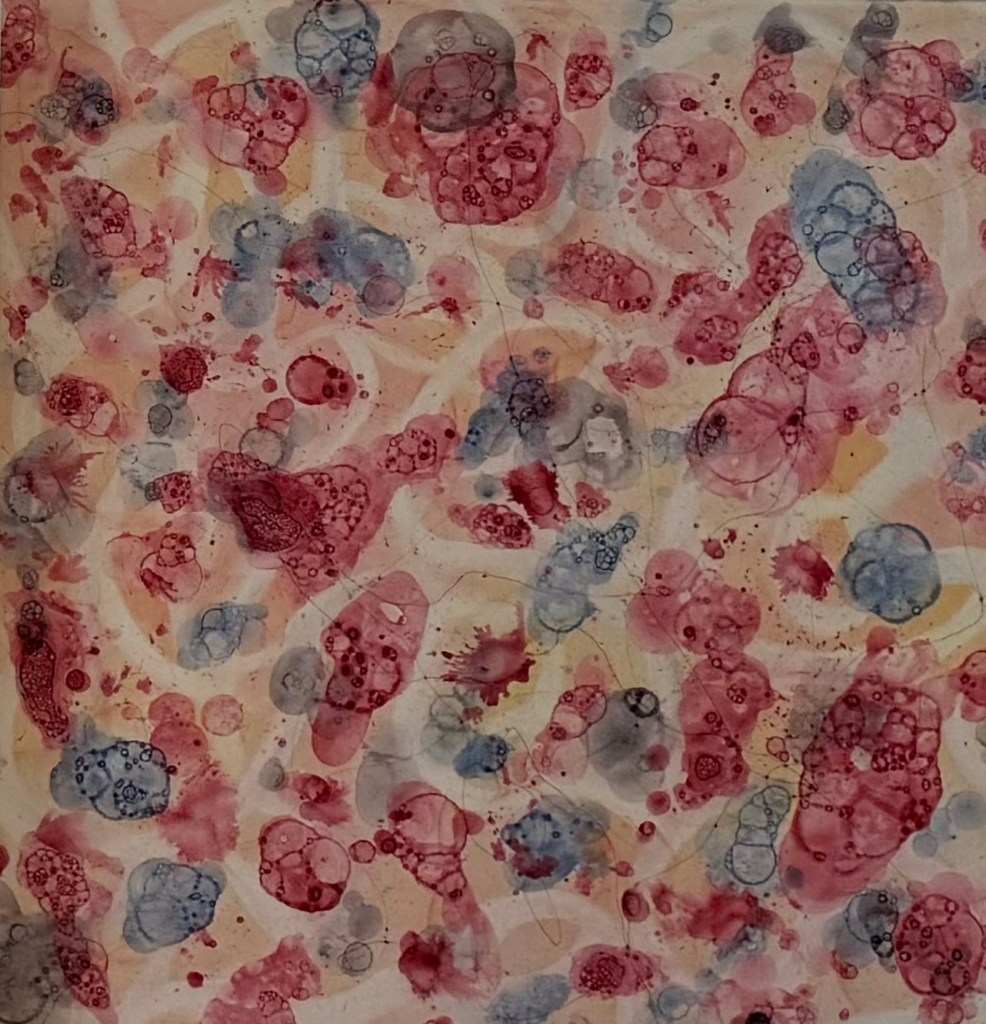
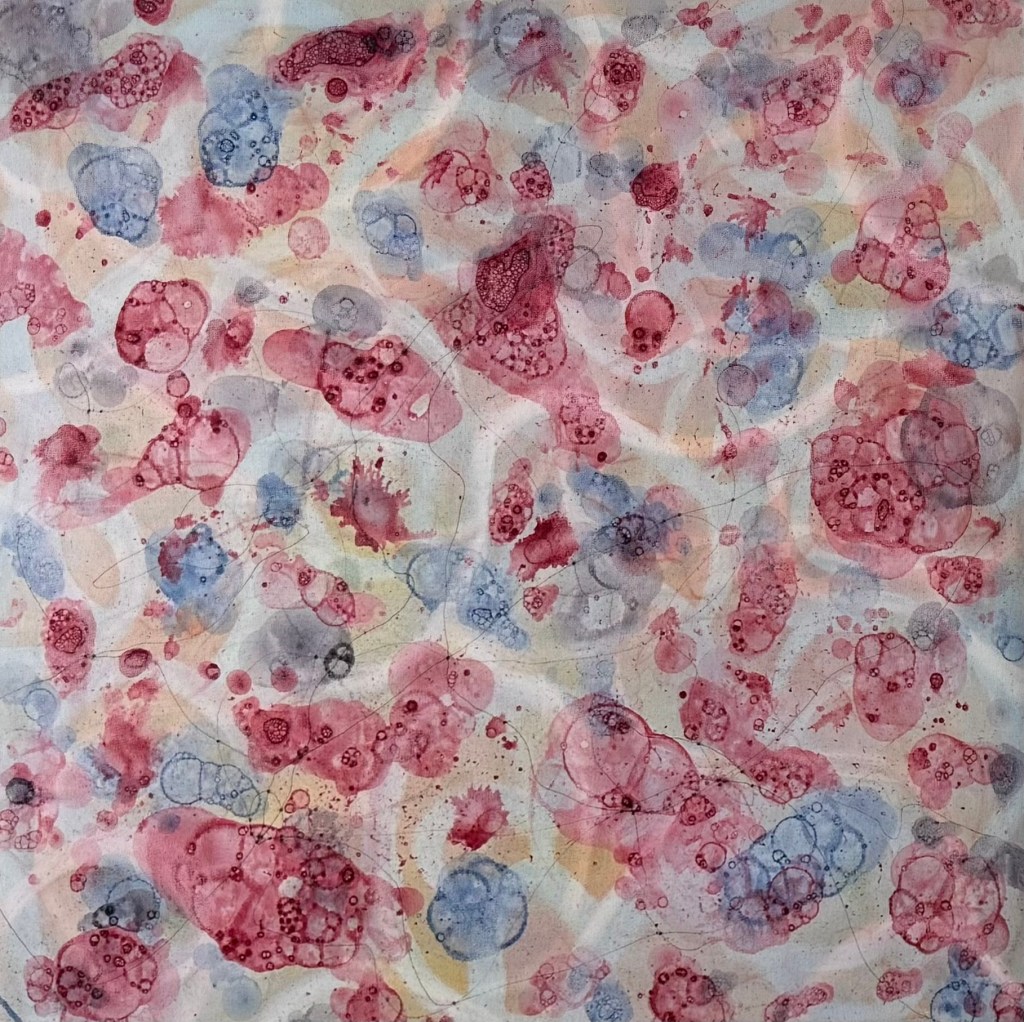
I’m not sure about these, or whether I prefer the previous set. I think that I need to sit with them for a while. I thought the first one was too bright (maybe because I’ve been in monochrome for so long) and so I tried knocking it back with a dark grey, wiping out areas to bring back some lightness. I like that they are still open – I see cells, someone else might see a flower bed with hydrangeas.
One thing that I would really like to do is experiment with 3 dimensionality. I’ve always resisted being constrained by the canvas and usually go off it – what if there was something coming out of it; out at you – maybe keeping you away or possibly making you part of the work? I was thinking if I had a number of canvases (3 is always a good number) I could connect them with something like an umbilical cord ( thinking back to siblings and microchimerism).
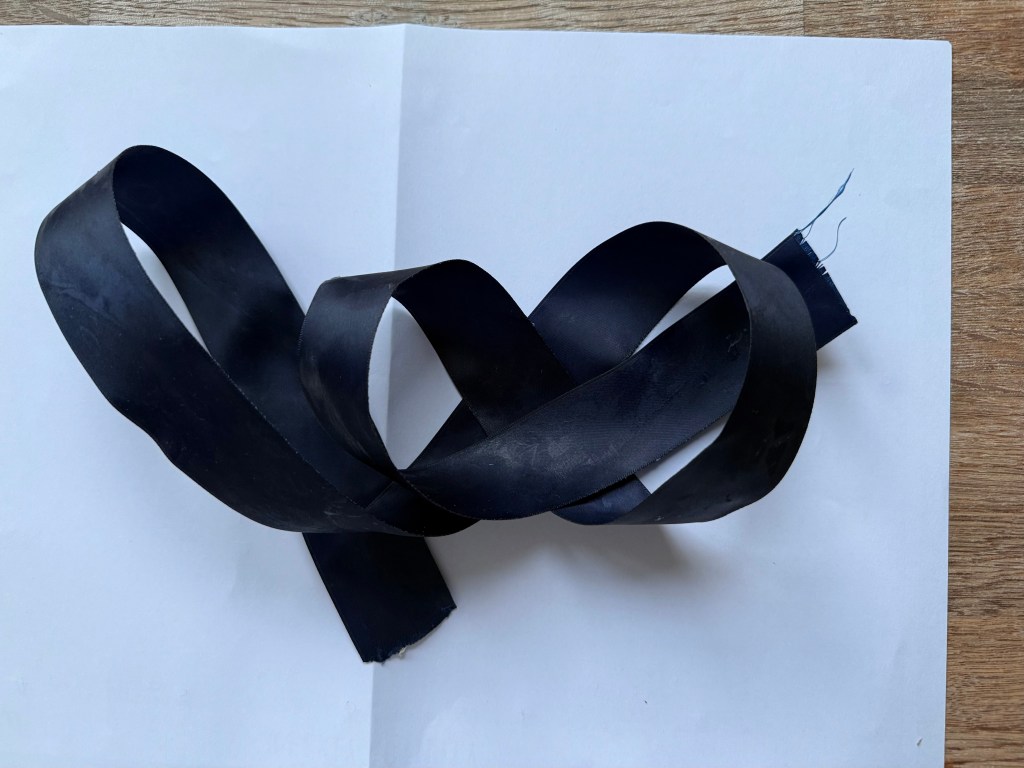
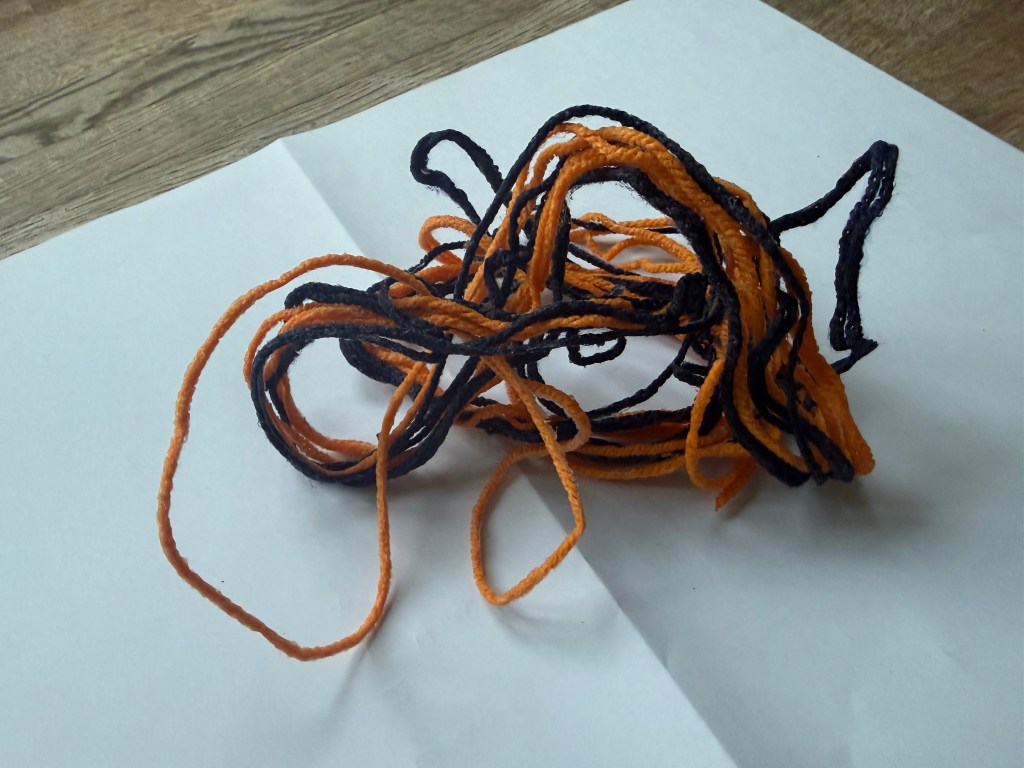
I came across a recipe for stiffening material on Facebook using cornflour, sugar, water and PVA glue. It should have been white sugar presumably so you can’t see it when it’s dry. I only had golden caster. I tried it on a ribbon and some wool. It’s not that great. I think I’ll look at wire and organza instead.
 Kate McCalmont-Woods